
Many travelers in Japan find themselves in Kyoto – walking along the peaceful Kamogawa River, climbing the snaking stairs of Fushimi Inari Shrine, or gazing up at the towering bamboo at Arashiyama.
Kyoto is a wonderful place, but one thing is for certain: Everyone goes to the same places.
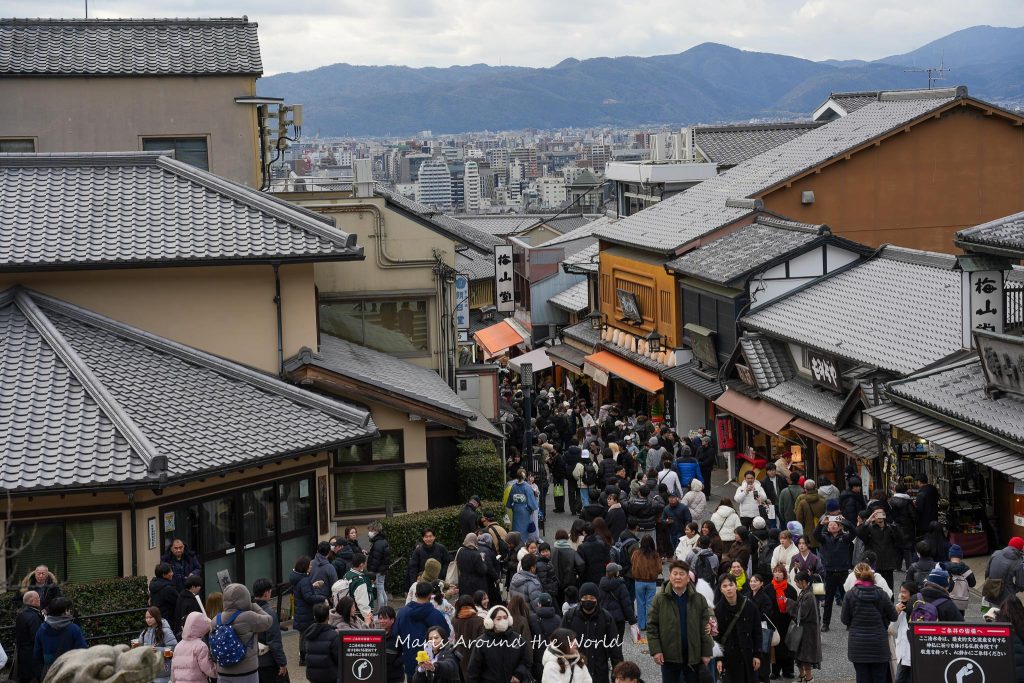
The streets and buses swell with tourists at major tourist spots, while just beyond the trodden path – outside the city or in neighboring Shiga, for example – rest lesser-known and lesser-traveled areas.
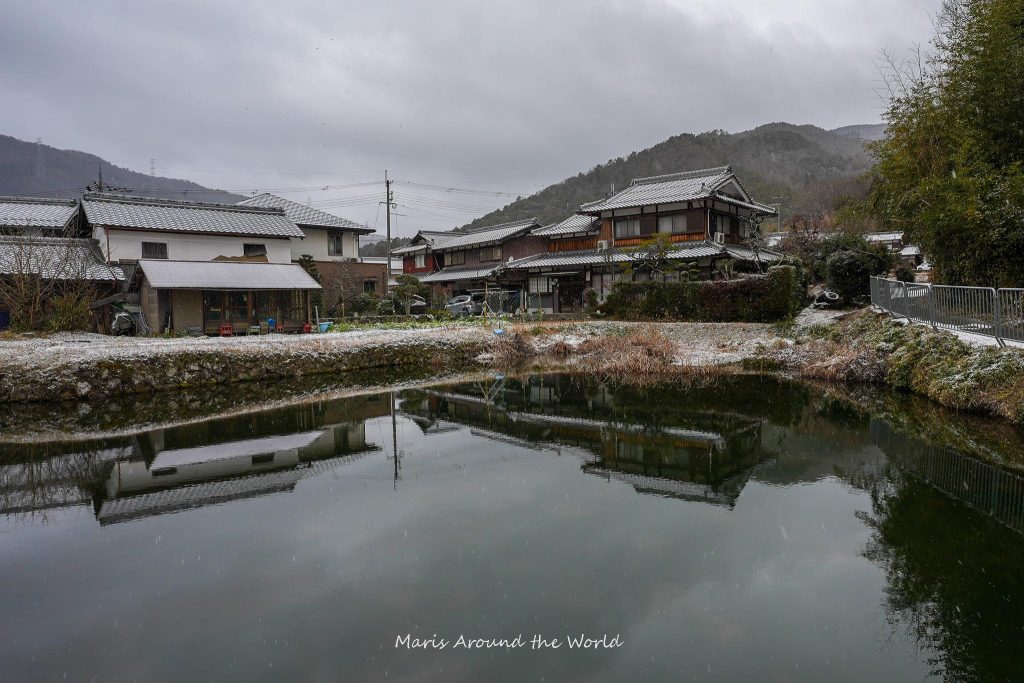
I made my way to one of these places: Kameoka, which was about an hour’s drive from Kyoto’s city center.
What brought me here, you ask? The opportunity to meet a swordsmith and try my hand at forging a steel knife!
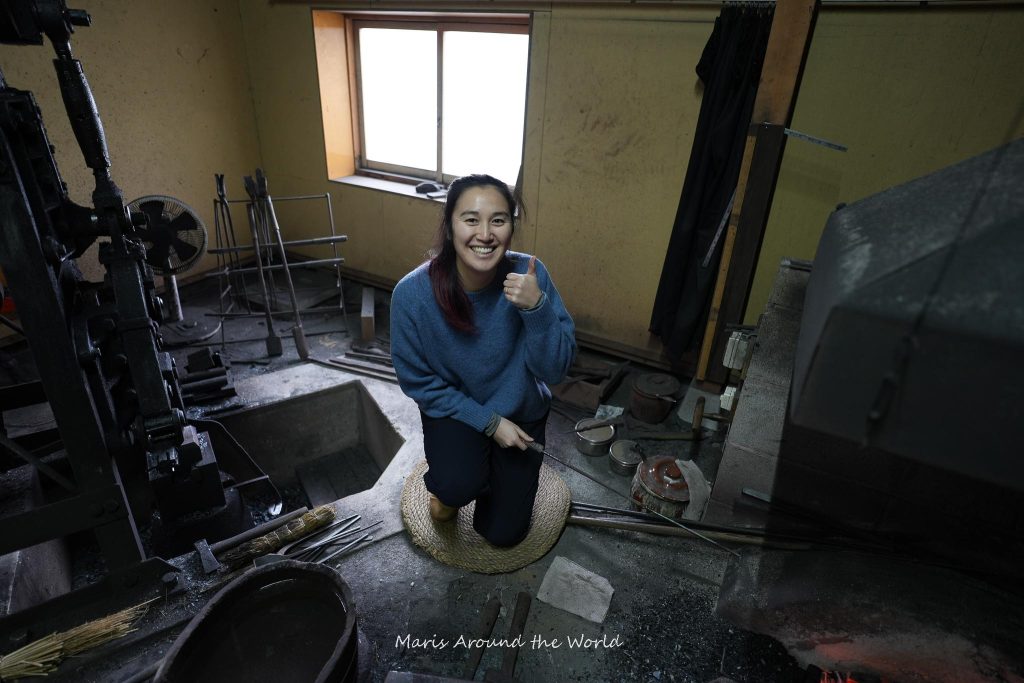
After the half-day experience, my arm was tired from striking steel and stoking coals. But it was worth it for a shiny, sharp blade I could call my own!
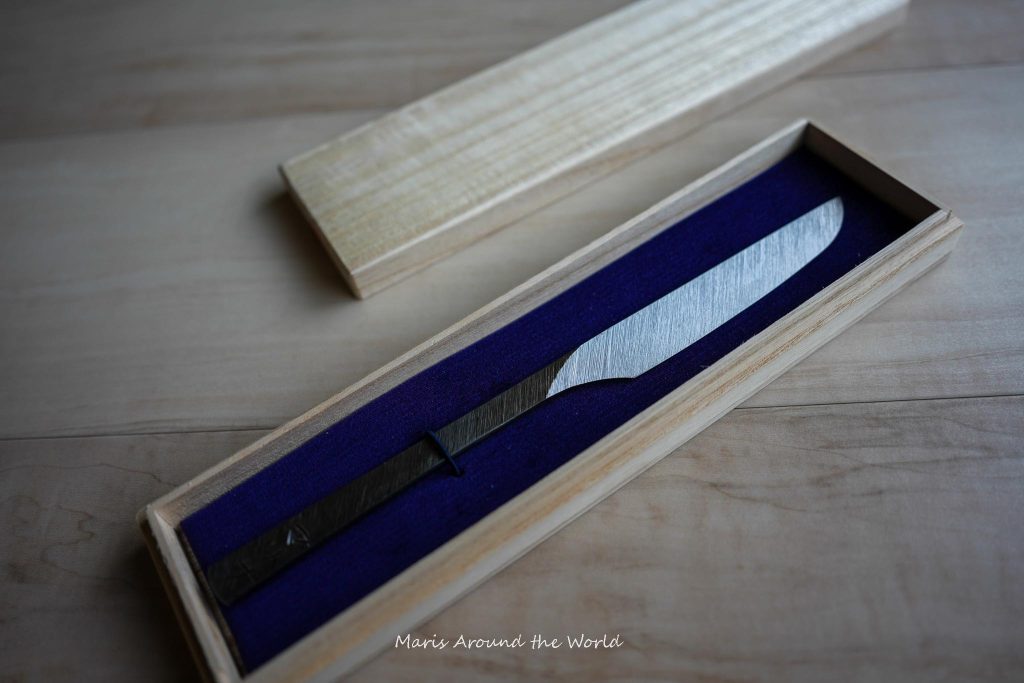
Read on to learn about this unique knife-making experience in Kyoto – one that I recommend to anyone interested in knives, traditional crafts, and Kyoto activities off the beaten path!
This post contains affiliate links, which means I may receive a commission if you purchase through my links, at no extra cost to you. Please read the full disclosure for more information. Additionally, while the organizing company, Wabunka, allowed me to join this tour free of charge, all of the content and opinions in this post are my own.
Behind the Scenes Video
Come with me to a swordsmith in Kameoka and watch the knife-making in action in this video!
Read more about the tour and sign up for yourself here.
To the Mountains of Kameoka
The journey began near Kyoto Station, where I picked up a taxi and headed to the mountains of Kameoka. It was a 50-minute ride to Masahiro Swordsmith (Masahiro Tanto-jo), which was located near the border of Kyoto and Osaka prefectures.
I could have traveled via train from Kyoto Station to Kameoka Station and then picked up a taxi instead, but since it can be difficult to get a taxi at Kameoka Station, I opted for a taxi from Kyoto, which was quicker and more certain. The ride cost 10,340 yen (~$70).
Once out of the city, the traffic cleared away to a quiet breath of sprawling countryside.
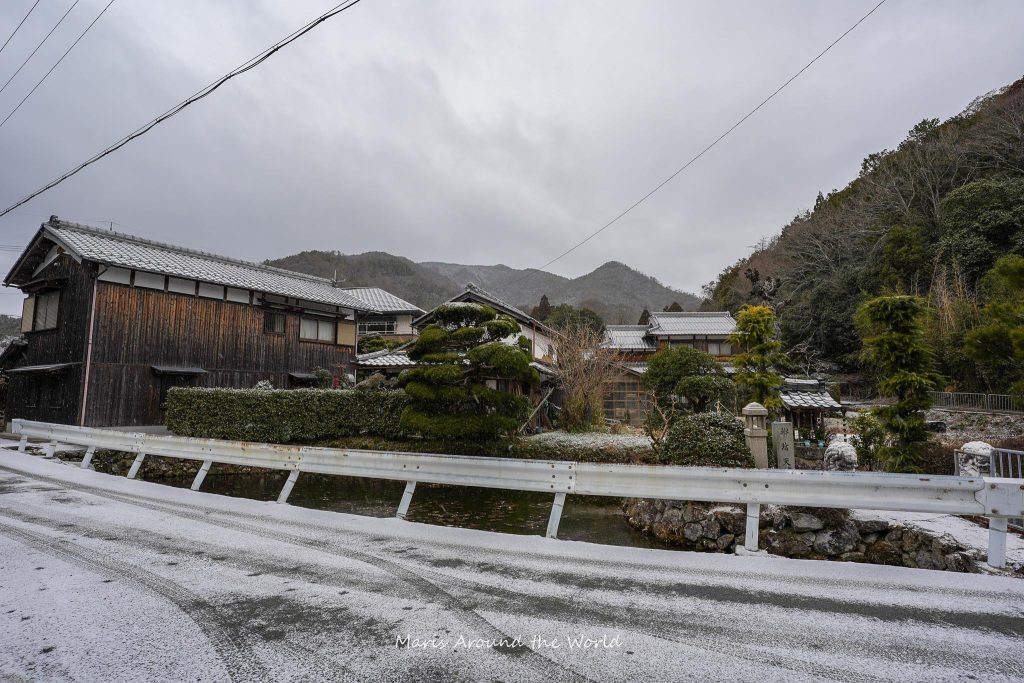
As we drove, the crisp morning air danced with snow flurries (it was late January), and by the time we arrived at the swordsmith, a thin blanket of white covered the street.
Meeting the Swordsmith
After arriving, I made my way inside, where I was greeted by the swordsmith, Yuya Nakanishi. With the help of a friendly interpreter (whose services were included as part of the tour), I was introduced to the basics of Japanese swords and given an overview of the day’s activities.
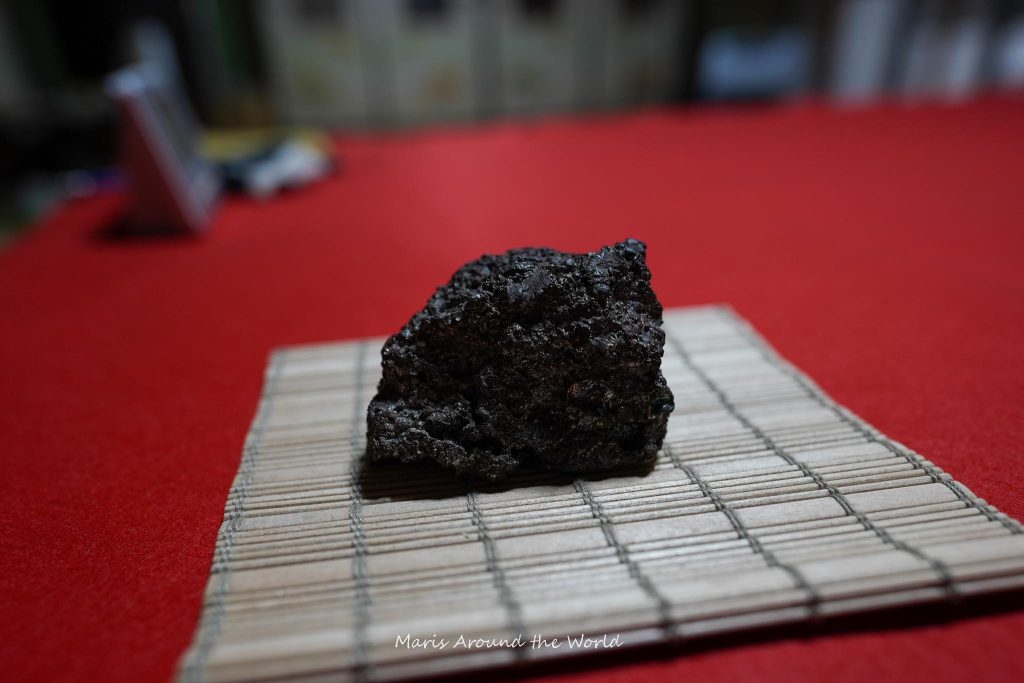
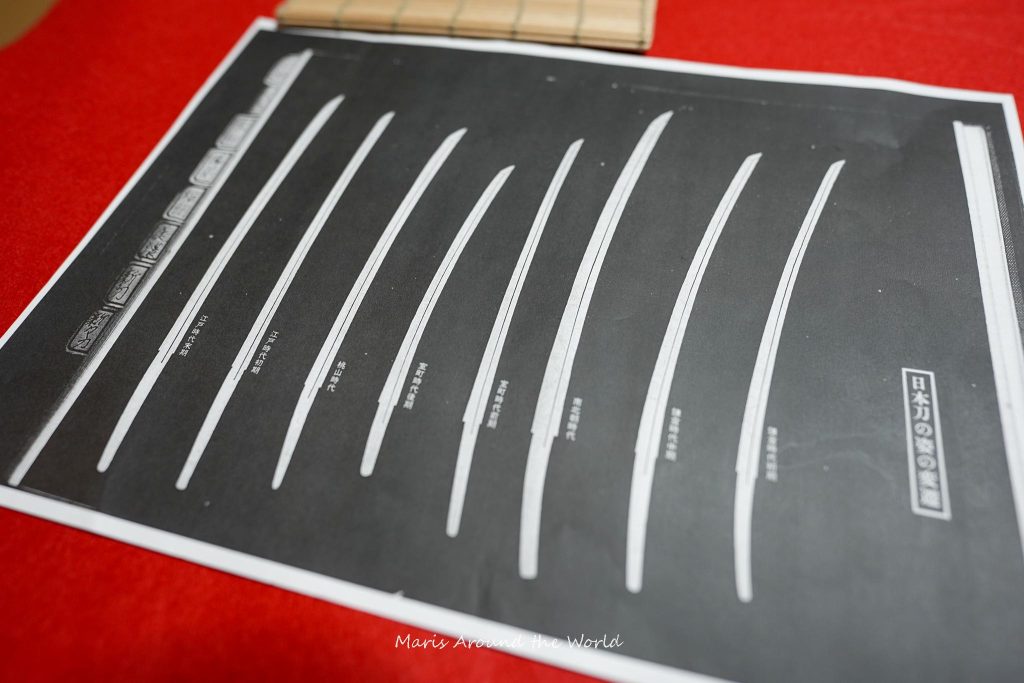
After the introduction, it was time to get to work. Off to the forge!
Forging Steel and Stoking Flames
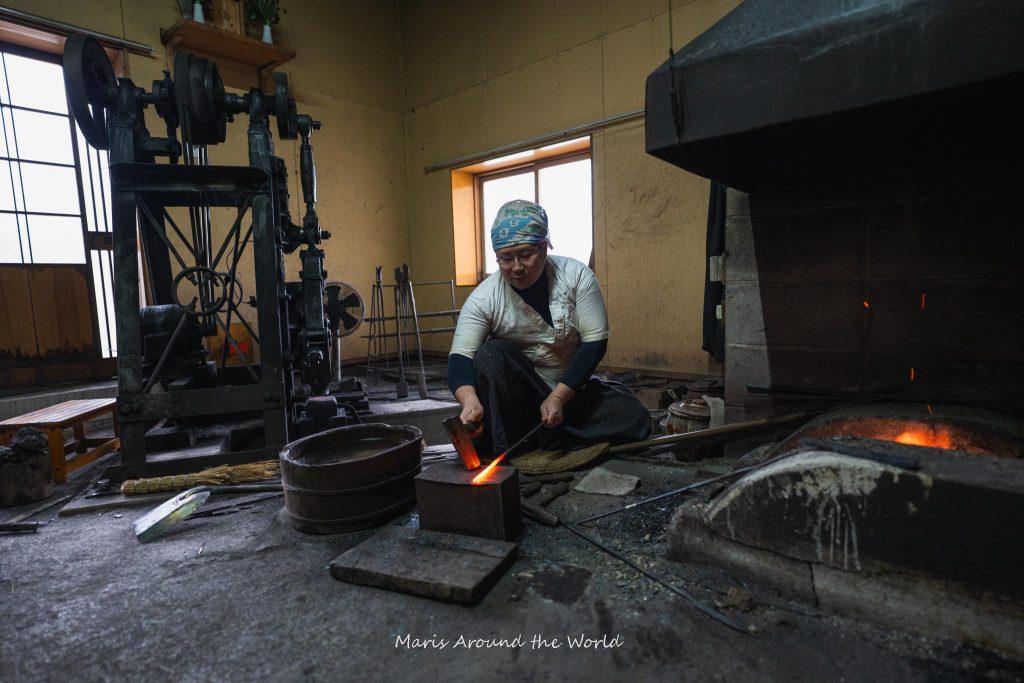
The majority of the activities took place in the forge. Nakanishi showed how to heat a piece of steel and carefully hammer it into the shape of a small knife.
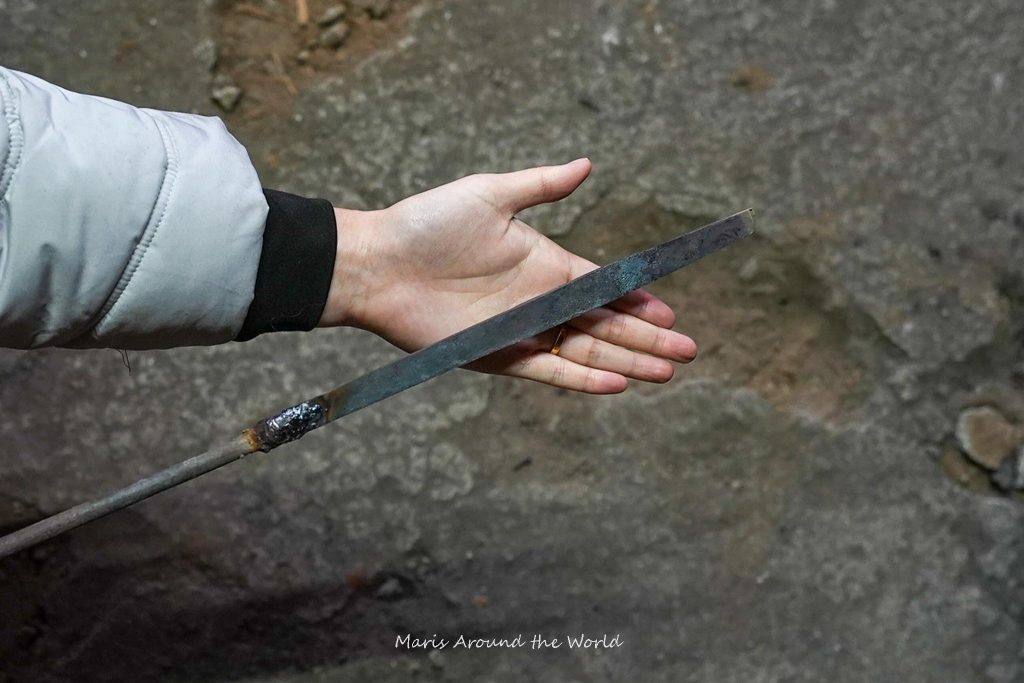
With the air from the bellows, the coals burned a fiery red. Once the steel gleamed hot, it was struck again and again with the hammer.
After Nakanishi demonstrated the process, it was my turn to replicate. It seemed straightforward, but for a newbie like me, it was trickier than it looked.
I kneeled by the flame and got to work. Being left-handed, I had to work the bellows and hammer the steel with the same arm. It wasn’t long before my arm grew heavy.
Making a knife, let alone a katana, is hard work!
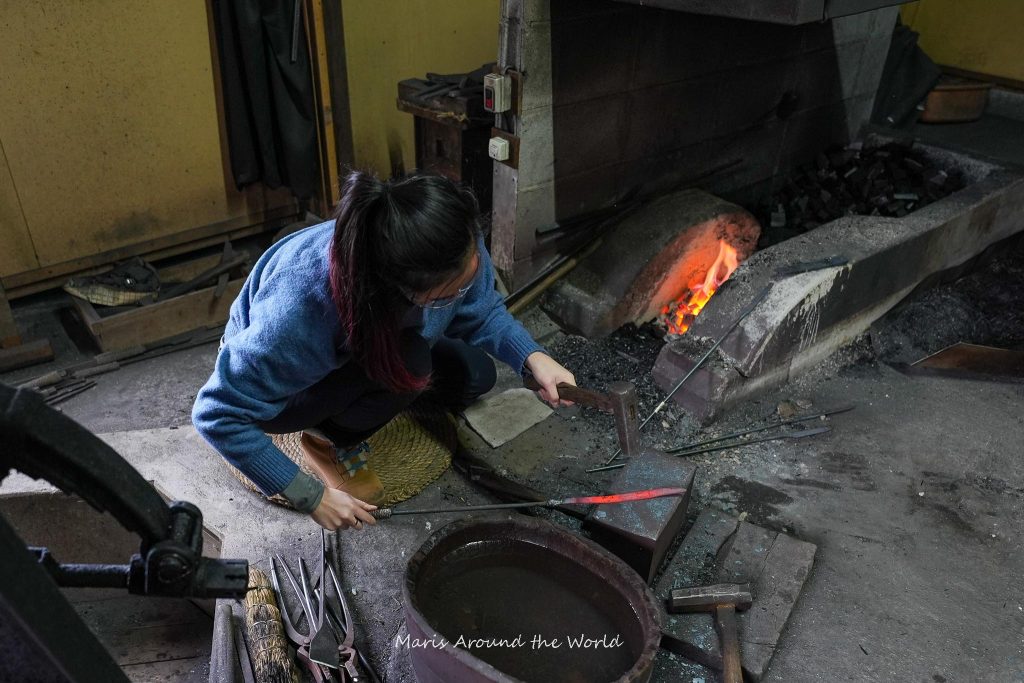
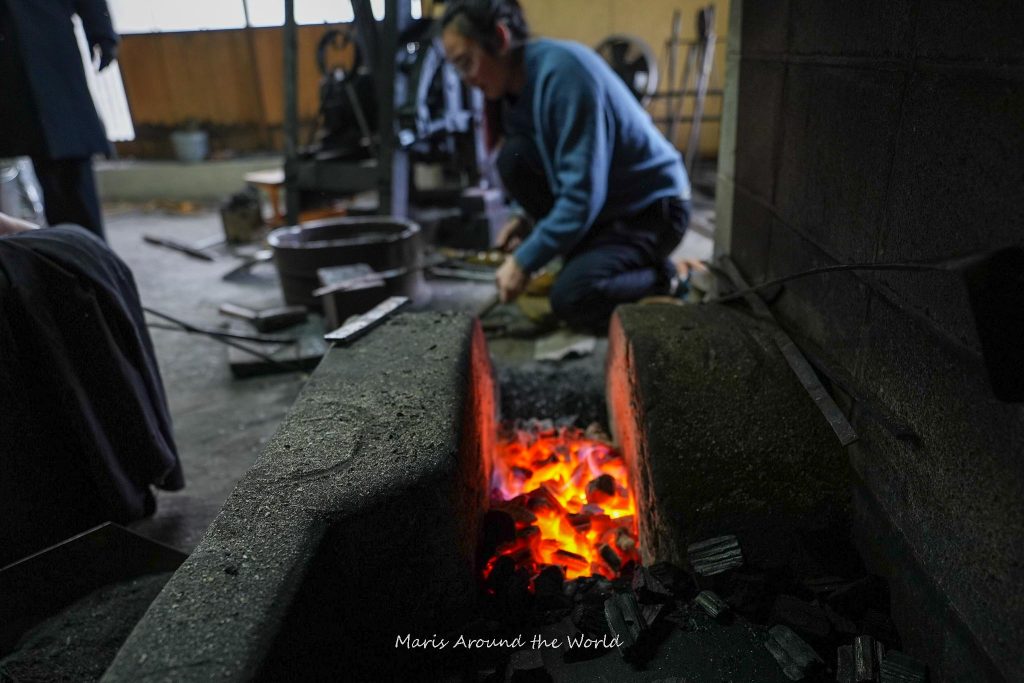
Unsurprisingly, my hammer strikes were all over the place, so my initial shape came out a bit wonky. But there was no need to worry, since afterwards, the swordsmith adjusted and fixed the shape. Phew!
Painting the Hamon Blade Pattern
The next part of the process was creating the hamon or “blade pattern”. While not functional, the hamon gives the blade an aesthetic touch and personal character.
Using a wooden stick, I smeared a thick gray mixture of whetstone, charcoal, and other mystery materials onto the knife’s edge, creating a wave-patterened protective resist.
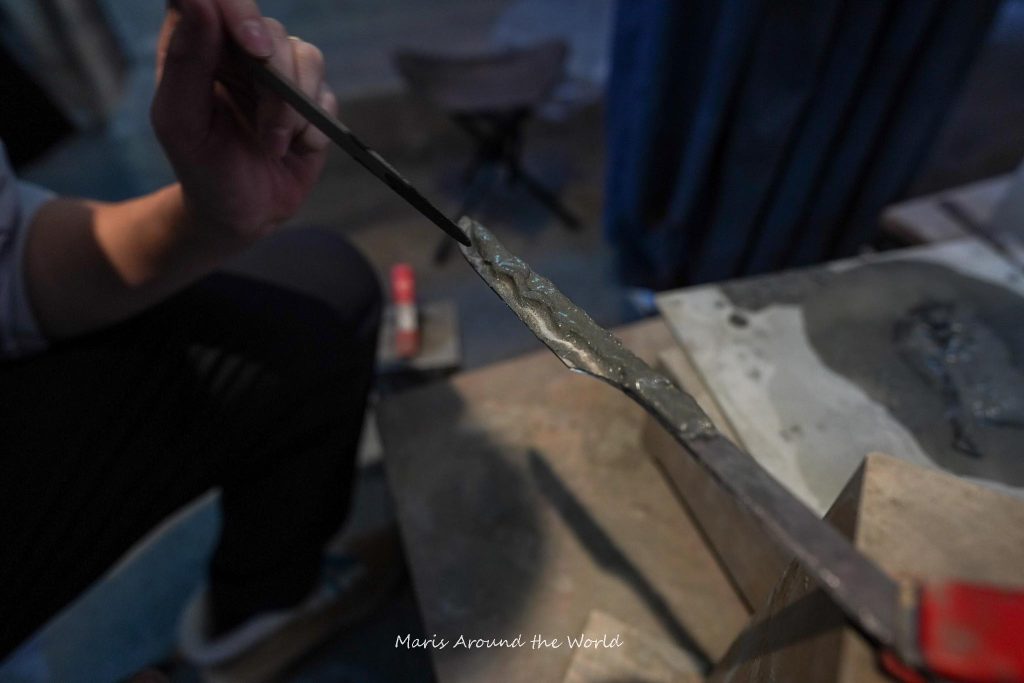
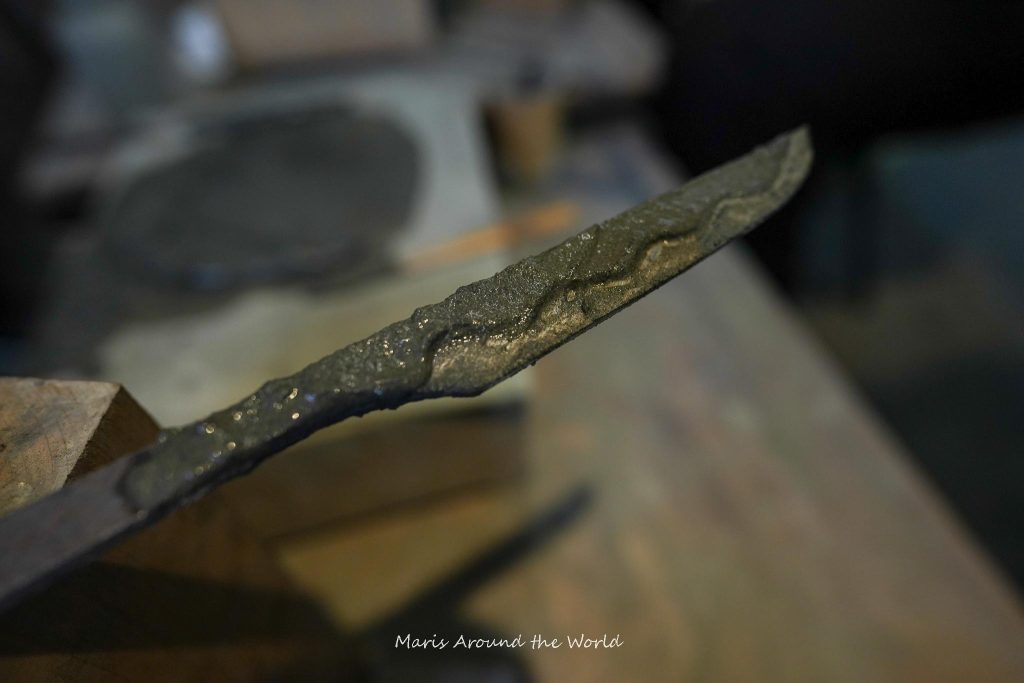
The painted mixture was then baked over coals before the final step and finale of the day: quenching!
Quenching the Blade
The final step was to quench the blade, which involved heating it to a searing hot temperature, then rapidly cooling it in a bucket of water. With the lights turned off, the swordsmith judged the temperature of the steel just from its color.
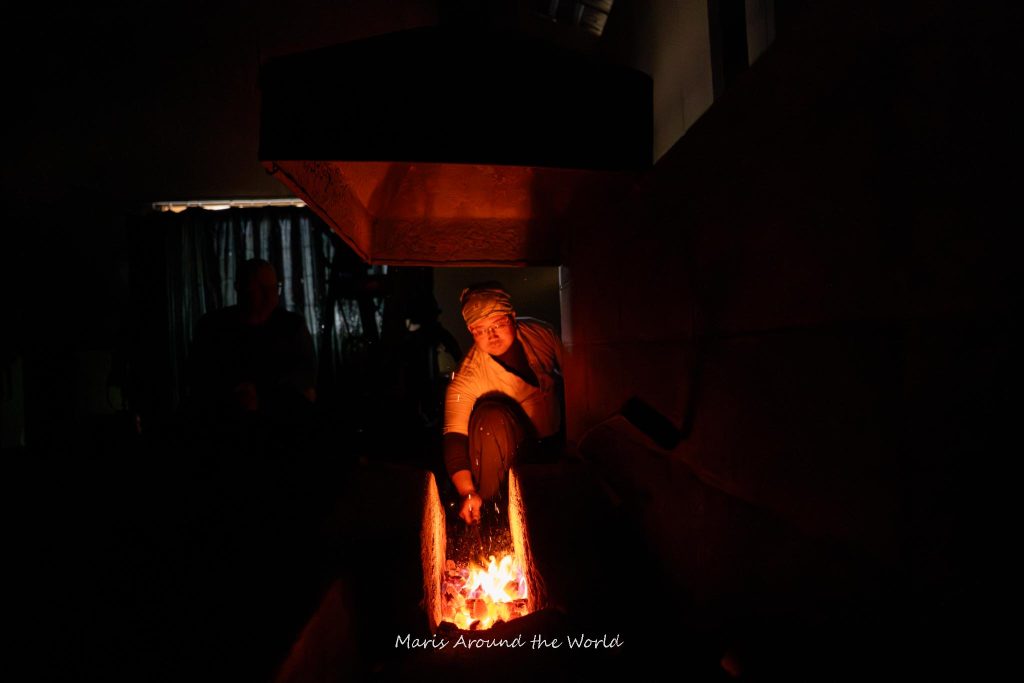
Once the steel reached 780°C and blazed a bright orange, into the warm water bucket it went: ssssssss!
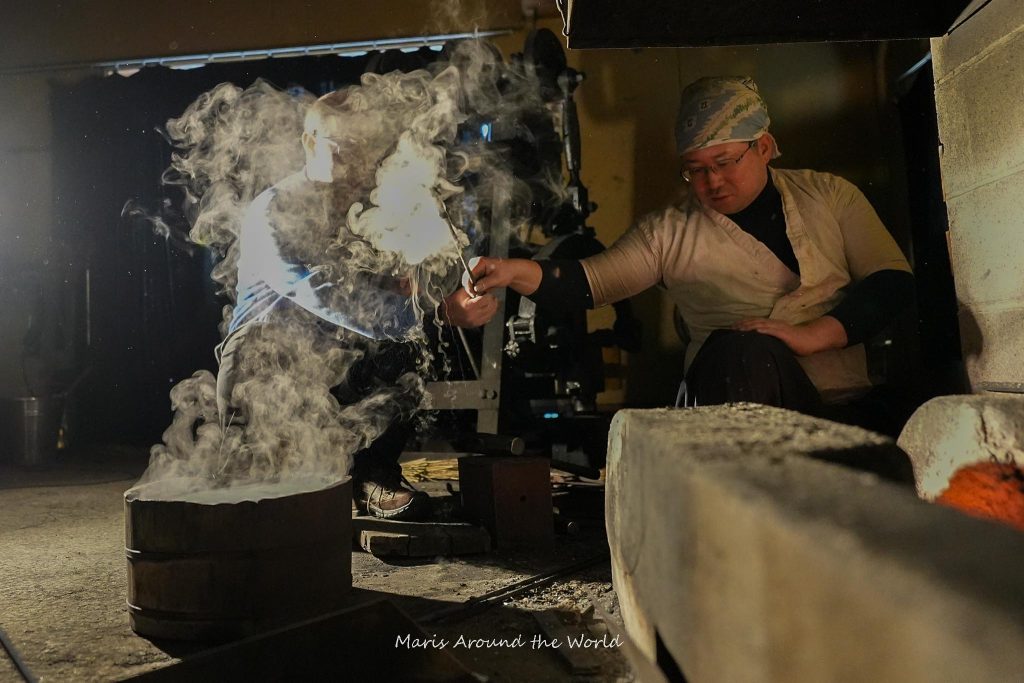
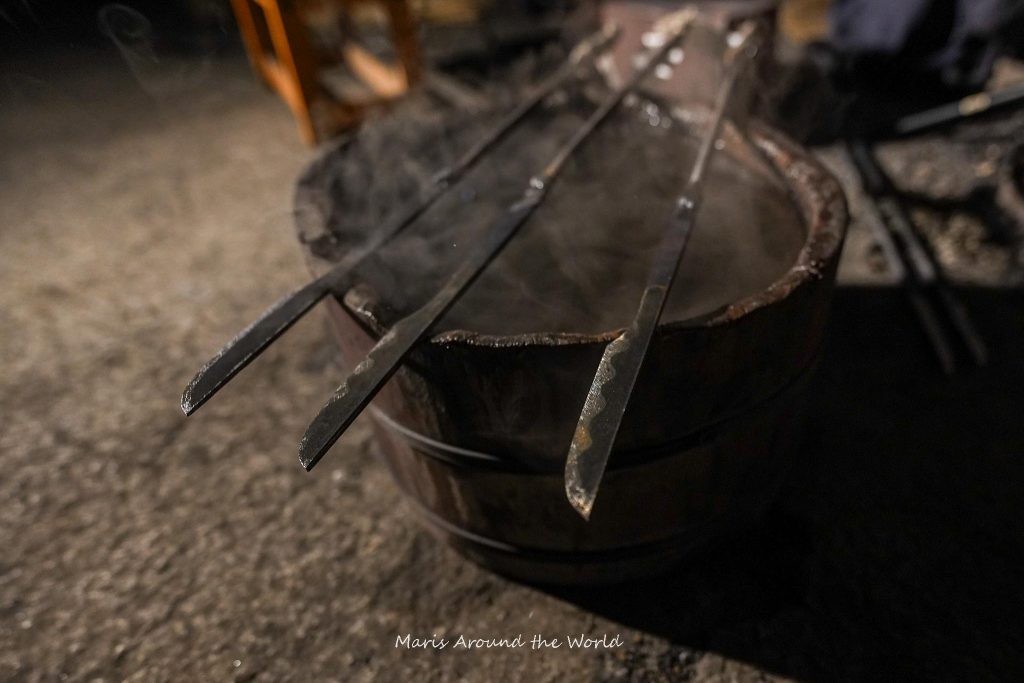
Out of the water, the painted hamon was revealed!
Sharpened to a Finish
After quenching the knife, my part in making the blade was complete, but there were still a few finishing touches that needed to be done. Nakanishi cut the knife off the steel rod, then carefully finished and sharpened the edge.
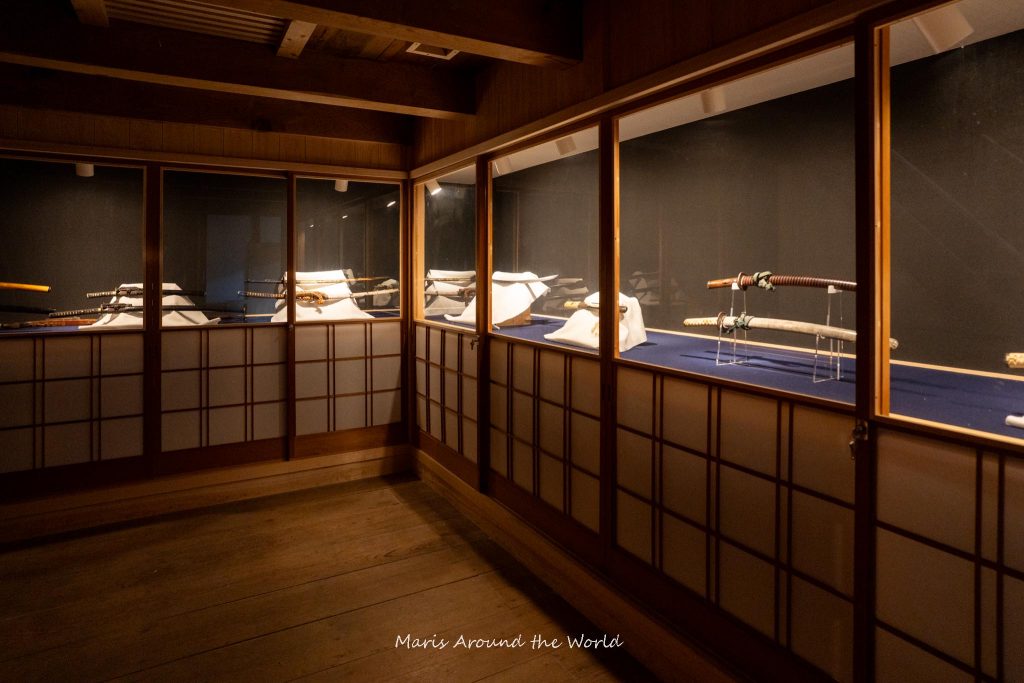
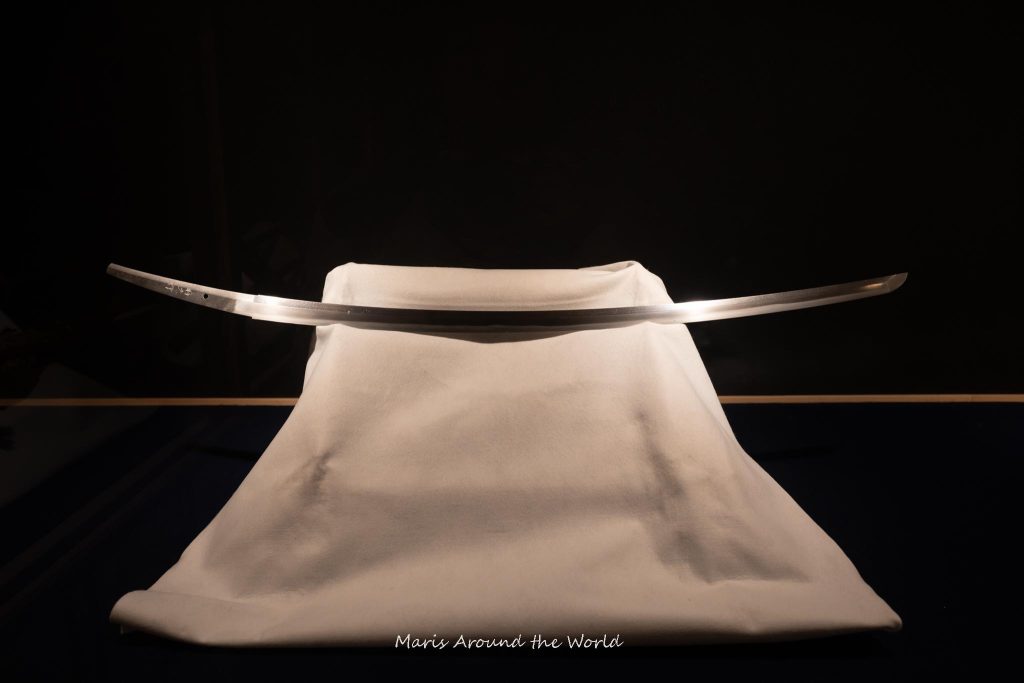
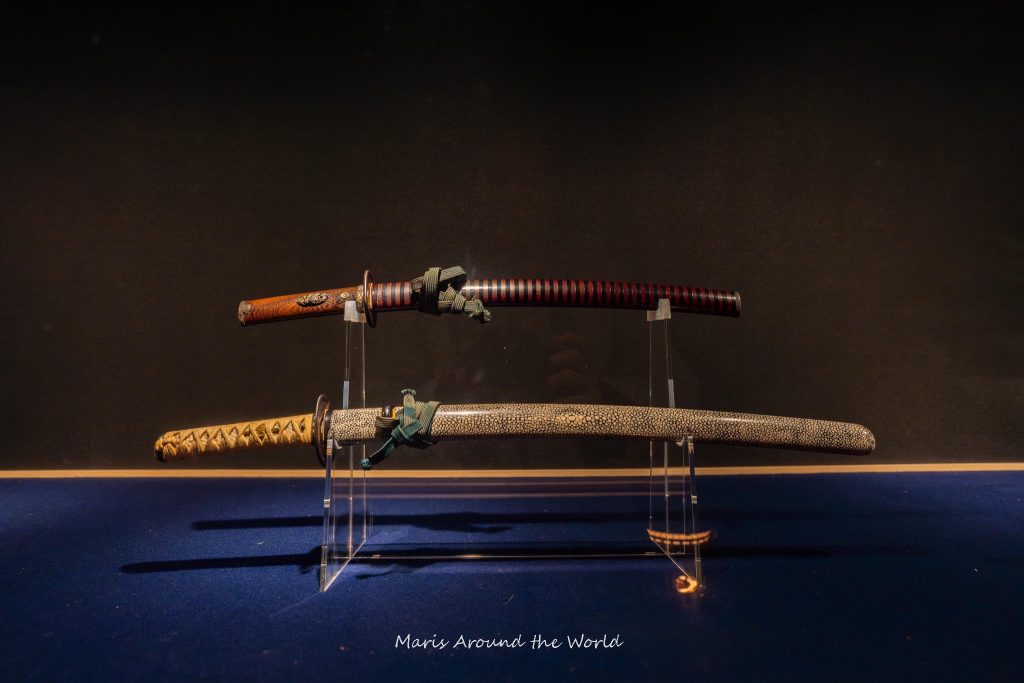
As the craftsman worked, I took a look at his collection of forged katanas and samurai armour. Having just barely made a basic knife myself, I stood in awe at the large, arching blades before me.
Finally, I was able to see the finished product – a shiny silver knife engraved with my name and emblazoned with the hand-painted wave hamon.
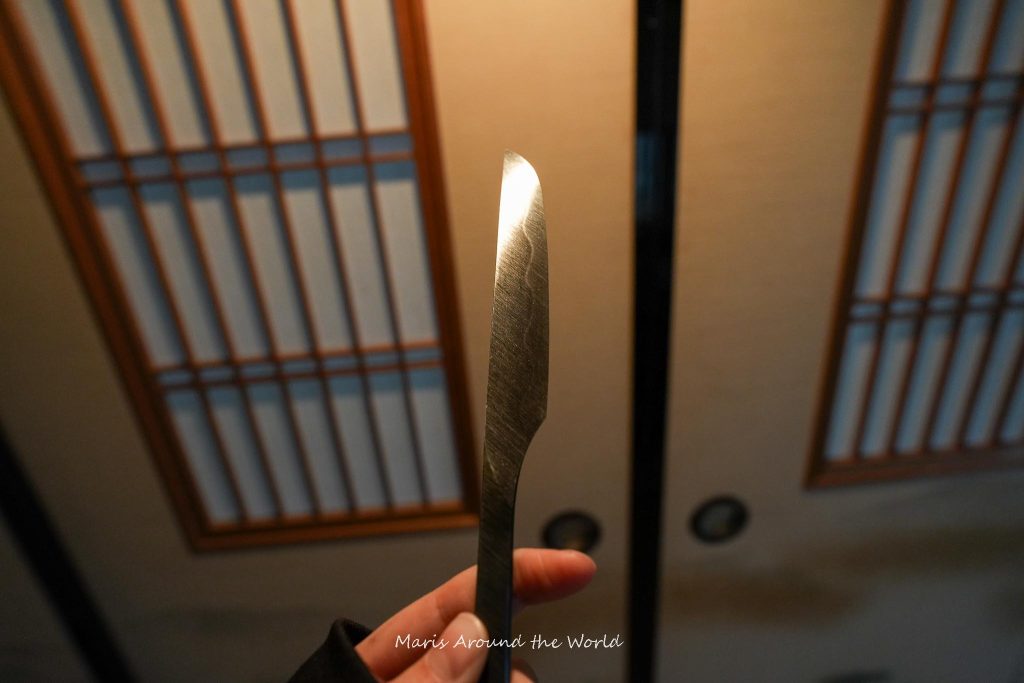
What a treasure! My very own knife and keepsake of the experience!
Also, the blade is sharp!
Back to the Heart of Kyoto
After tucking away the finished knife into its protective box and saying goodbye to Nakanishi, I made my way back to Kyoto City.
This time, I took a taxi to Kameoka Station, then the train to Kyoto Station.
Final Thoughts
Wow, what a wonderful experience! Not only was it a breath of fresh air to be out of the crowds of Kyoto, but I got to meet a local swordsmith and make a real steel knife!
I loved getting to partake in this hands-on experience and come away with knowledge, memories, and a one-of-a-kind keepsake.
Book This Tour Yourself
This tour was organized by Wabunka. The booking process was straightforward – I requested an available date from the tour page, and they got back to me a few days later with confirmation.
While the tour is not cheap, the quality of the content and the uniqueness of the activity exceeded my expectations. The tour also includes the services of a professional interpreter, which allows participants to smoothly interact with the craftsmen.
If this tour interests you, check out the details here. And if you are looking for tours outside of Kyoto, Wabunka also offers unique craft tours in other parts of Japan.
Where to Stay in Kyoto
If you are visiting Kyoto and are wondering where to stay, these are a few areas you might want to consider.
Being close to Kyoto Station offers the most convenience for travel outside of the city and to other prefectures. However, many of the main tourist spots require a long walk or a car/bus ride from the station.
Since I visited the area mainly to participate in the knife-making experience, I prioritized convenience and stayed at the Sanco Inn Kyoto Hachijoguchi Shikinoyu Hotel right by the station. While it wasn’t fancy, I couldn’t have asked for a more convenient place for direct access to Kyoto Station.
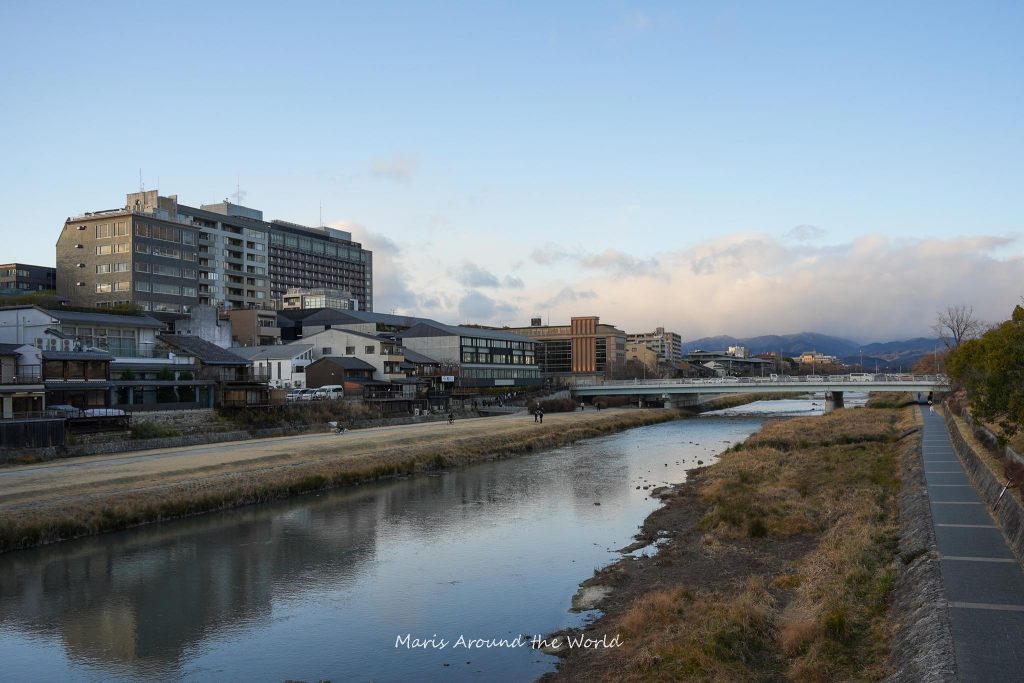
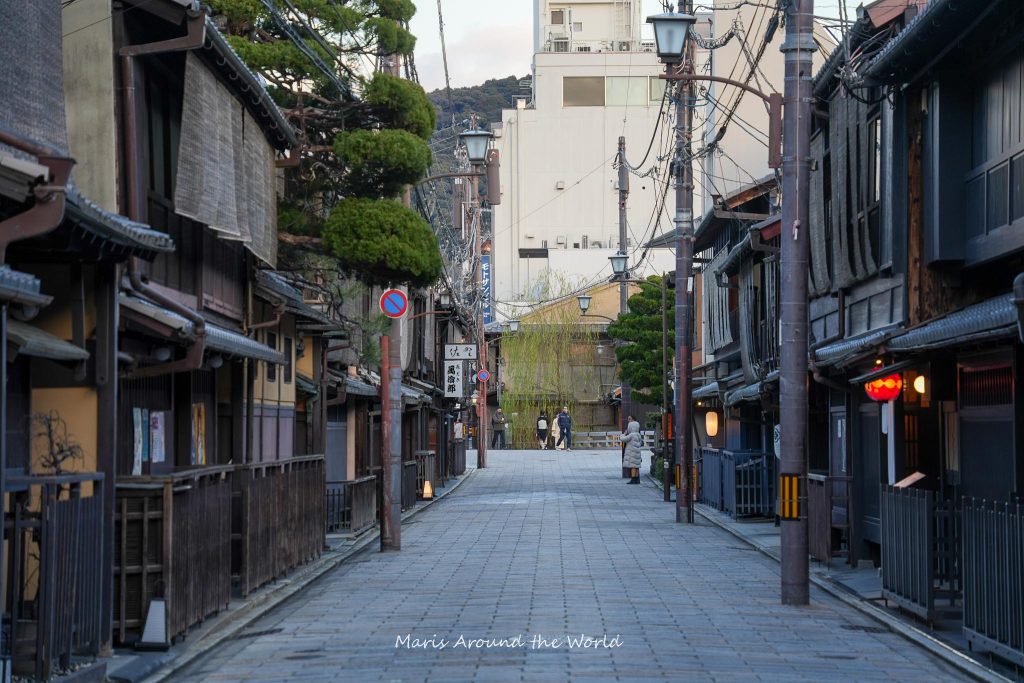
If you are looking for a more atmospheric stay with better access to the more popular areas of Kyoto, consider basing yourself near Karasuma, Kawaramachi, or Gion Machi.
Want to read more about other unique craft activities in Japan? Check out these articles!