
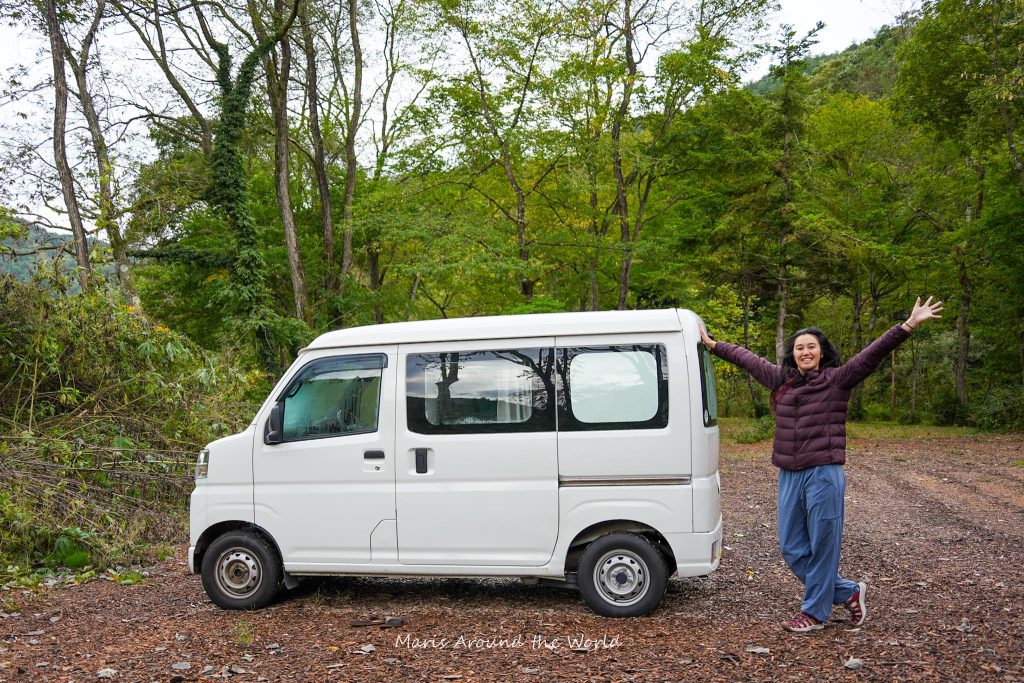
For two weeks, I lived in a tiny car – one that had been retrofitted with lights, an external battery, and a flat sleeping space, turning it into an agile, incognito campervan.
Each day of my travels, I discovered new areas in Tohoku, off-the-grid places seemingly untouched by other travelers.
Outside the window, breathtaking views of the setting sun and flaming fall colors were a daily sight – one I think back on fondly now that the adventures are over.
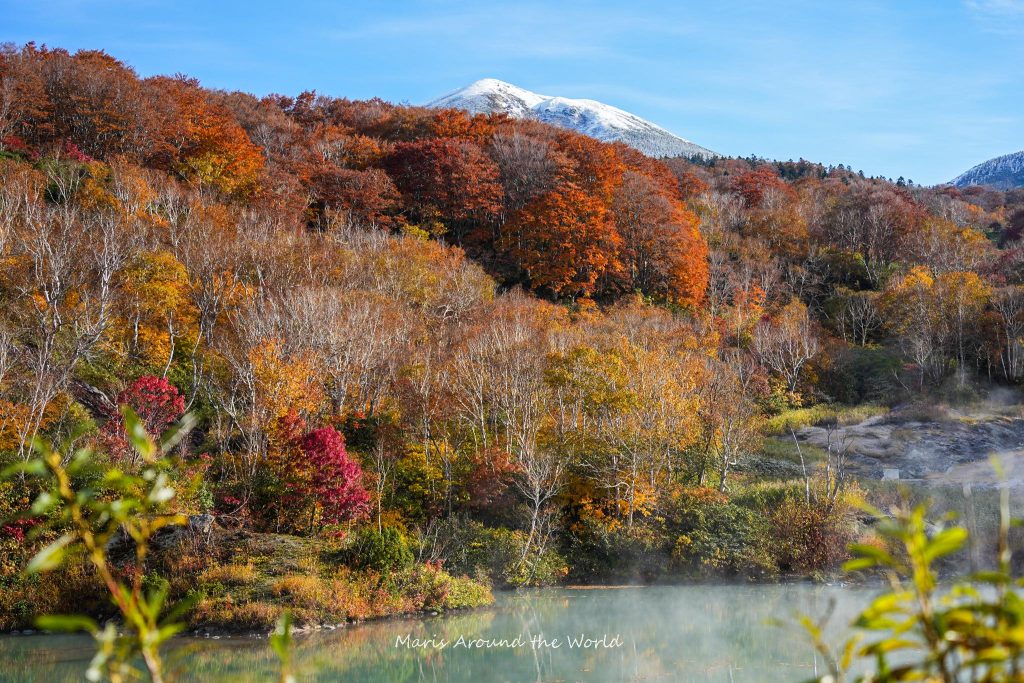
This article is all about traveling throughout Tohoku, Japan, in a mini campervan. Read to learn about the places I visited over the course of 2 weeks, including some of Japan’s top fall spots.
Whether you are looking to visit Tohoku yourself or are in the midst of planning a different Japan road trip, I hope you find the contents of this article helpful!
This post contains affiliate links, which means I may receive a commission if you purchase through my links, at no extra cost to you. Please read the full disclosure for more information.
Area Introduction: Tohoku
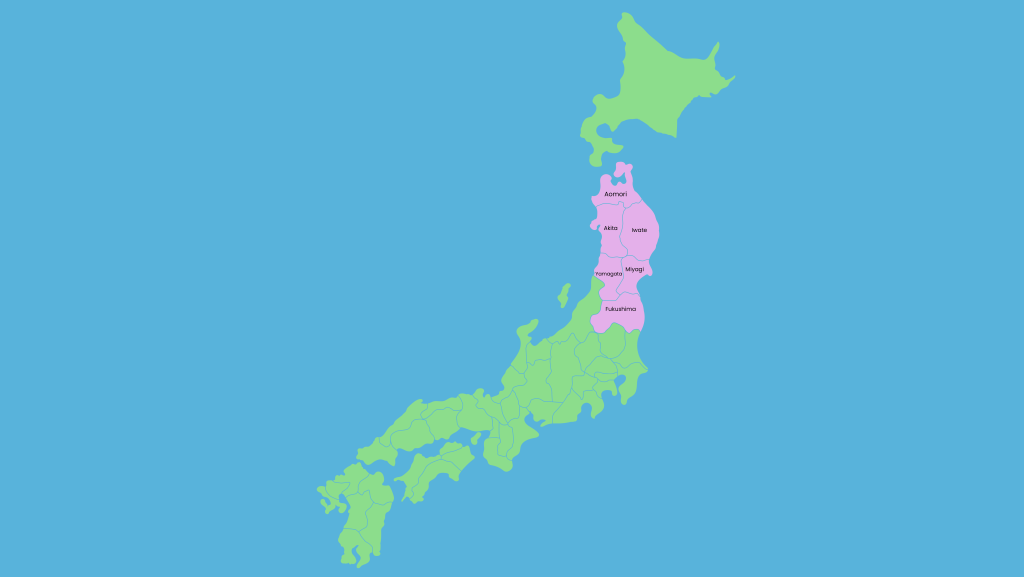
Tohoku is located in the northern part of Japan’s main Honshu island. It consists of 6 prefectures: Akita, Aomori, Fukushima, Iwate, Miyagi, and Yamagata.
Since the area is quite difficult to traverse without wheels, I figured it would be the perfect place for a leisurely, two-week-long road trip.
Since the Tohoku region is quite far north, fall happens sooner than in other parts of Japan. The area is also home to many famous sightseeing spots, complete with dazzling fall colors and winter landscapes.
Video Guide
Come with me as I travel for 2 weeks in Tohoku in a mini camper car! We will explore new places, see beautiful fall foliage, and learn the ins and outs of Japanese car travel.
For a complete overview of the trip, including tips on how to plan and book your own trip, check out this video.
Itinerary Overview
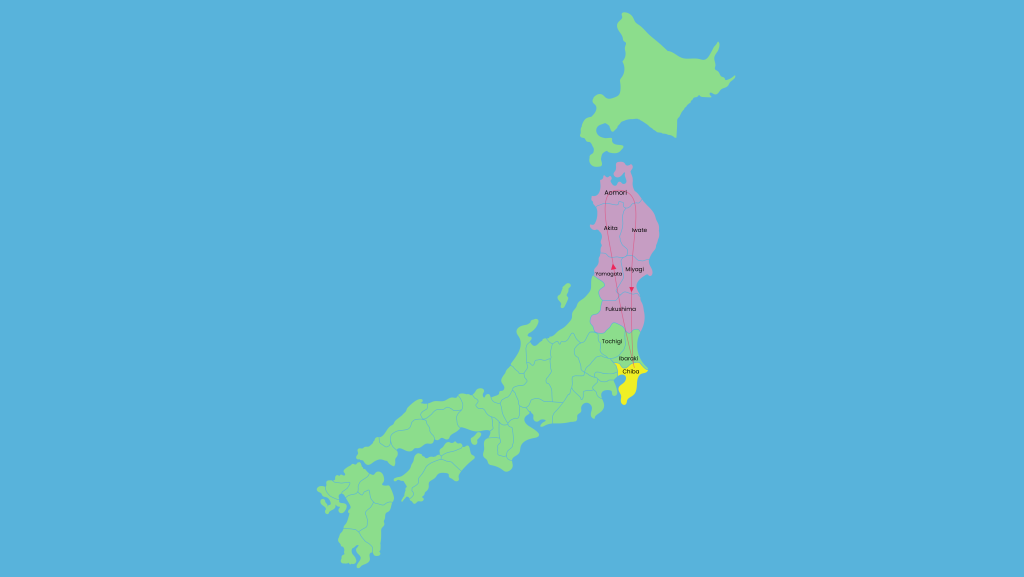
My journey began at Narita Airport in Chiba prefecture. From there, I took a taxi to the Campervan rental shop.
The trip started northward as I made my way through Ibaraki, Tochigi, Fukushima, Yamagata, Miyagi, Akita, and finally Aomori.
After reaching the tip of Tohoku, I circled back down along the eastern coast, stopping by Iwate, and again through Miyagi, Fukushima, and Ibaraki, before returning to Chiba.
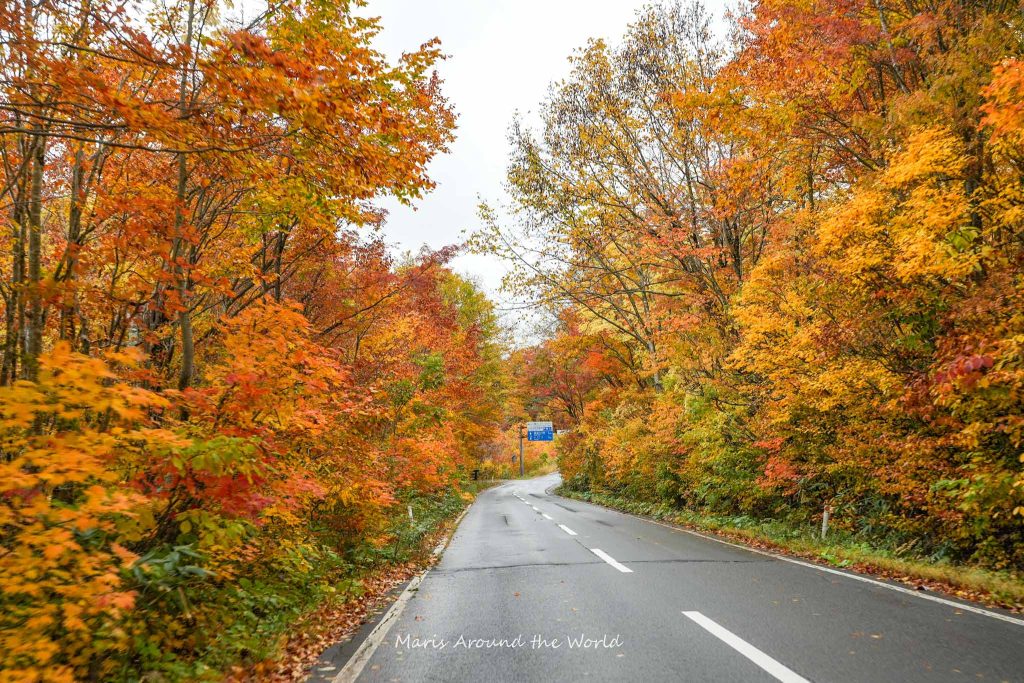
Since this trip took place from mid to late October, my main goal was to visit areas with great fall foliage.
Near the cities and by the water, it was a bit early to see the dramatic color changes, but higher up in the mountains, I was able to catch some breathtaking views.
- Day 1 – Chiba and Tochigi
- Day 2 – Tochigi and Fukushima
- Day 3 – Fukushima
- Day 4 – Yamagata
- Day 5 – Akita
- Day 6 – Akita
- Day 7 – Akita and Aomori
- Day 8 – Aomori
- Day 9 – Aomori
- Day 10 – Aomori
- Day 11 – Iwate
- Day 12 – Iwate and Miyagi
- Day 13 – Fukushima and Ibaraki
- Day 14 – Ibaraki and Chiba
- Day 15 – Chiba
Best Places to See Fall Colors in Tohoku
Wondering where to visit in Tohoku in the fall? Here are some of the best places I visited to see Japan’s incredible fall colors.
Jōgakura Bridge – Aomori
Jōgakura Bridge spans across a narrow river and overlooks a thick valley of trees. Fantastic views can be enjoyed all around, both near the bridge and from atop it.
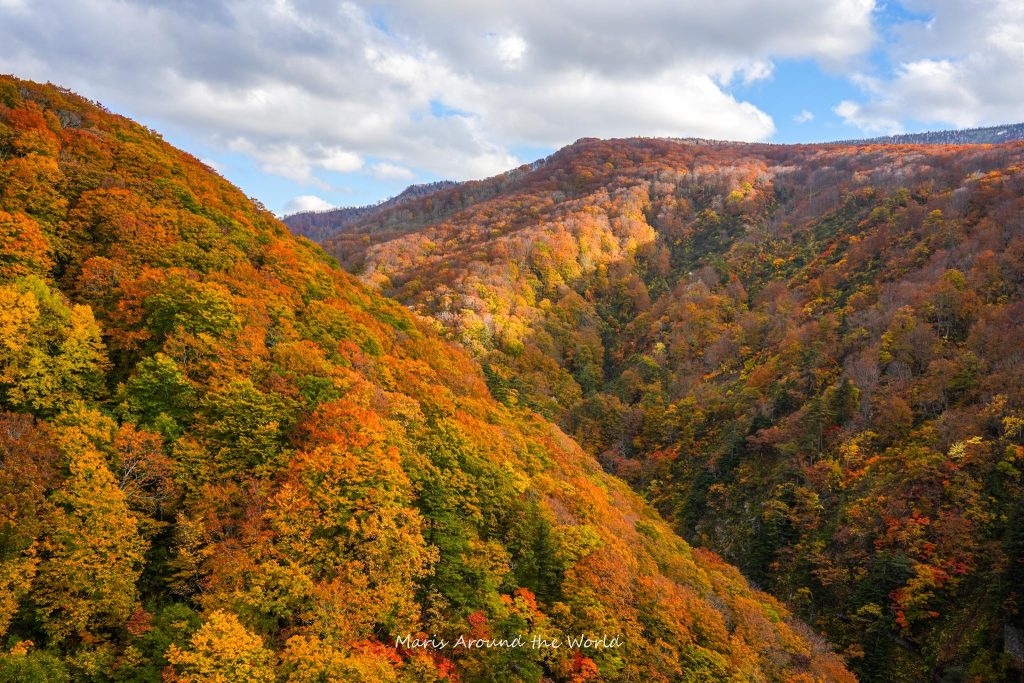
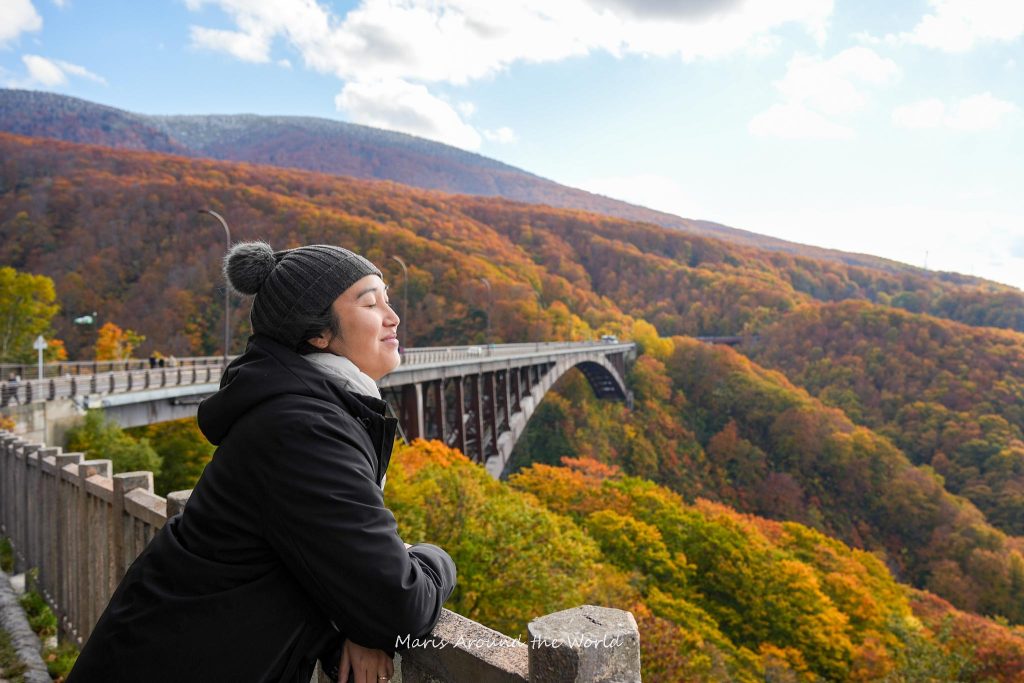
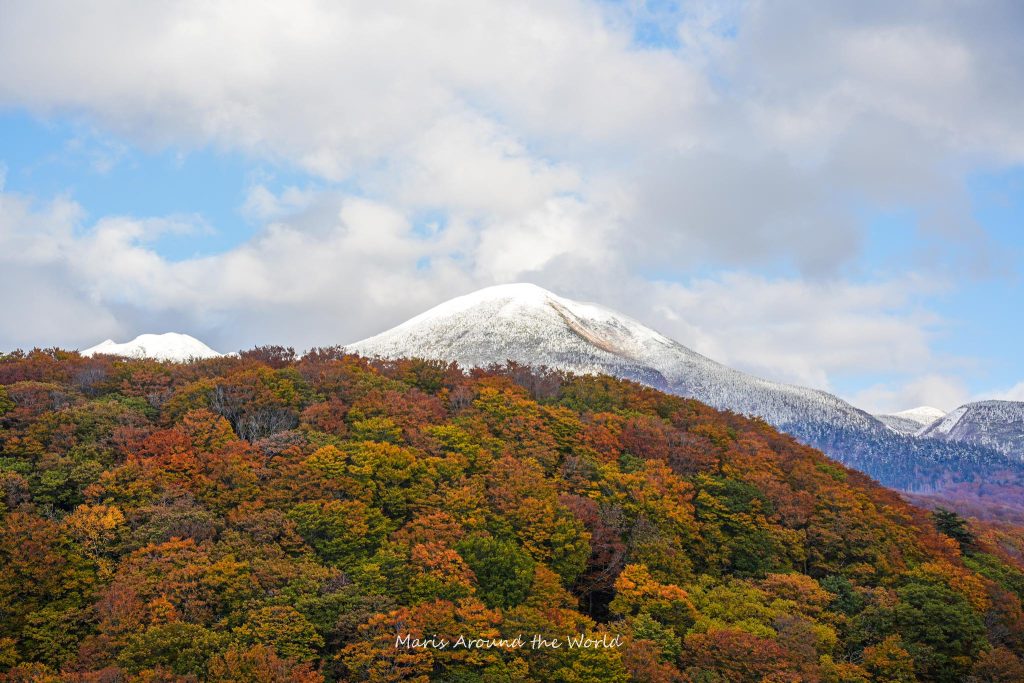
When I visited, the mountains in the distance were dusted with the season’s first snow, so it was neat to enjoy a scenery that depicted two seasons.
Goshogake Hot Spring Hotel – Akita
Next to the Goshogake Hot Spring Hotel is a short nature path that snakes around several mud ponds, including Ōyu-numa Pond. The atmosphere is amazing!
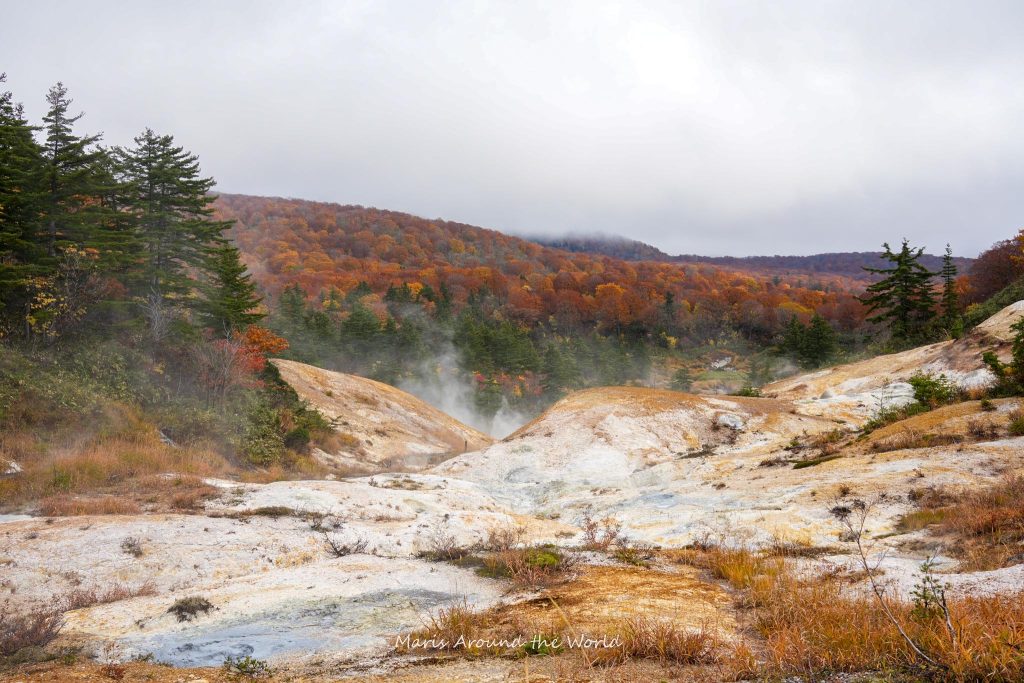
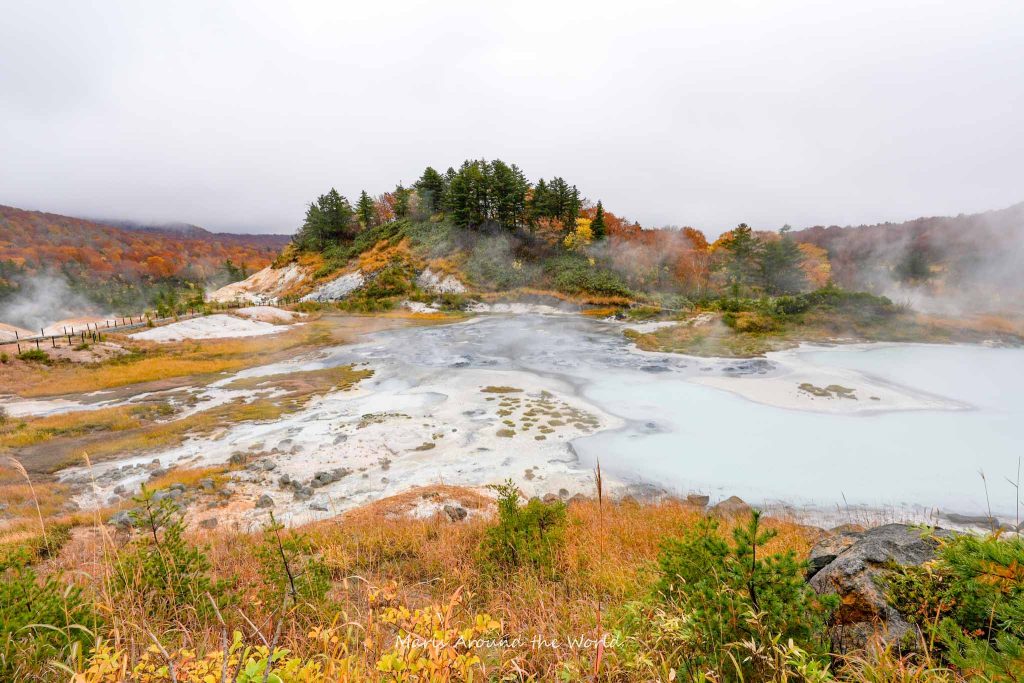
Billowing smoke, the strong scent of sulfur, bubbling ponds of thick mud, and colorful trees to top it off. This is hardly a famous spot, but it was one of my favorites! In the same area, you can also soak in the hotel’s hot spring facilities, which feature a special mud bath. For overnight stays, check here.
The road leading up to the Goshogake area (National Route 341) also had some of the most beautiful fall colors. After the rain, the hues were electric!
Hakkoda Ropeway – Aomori
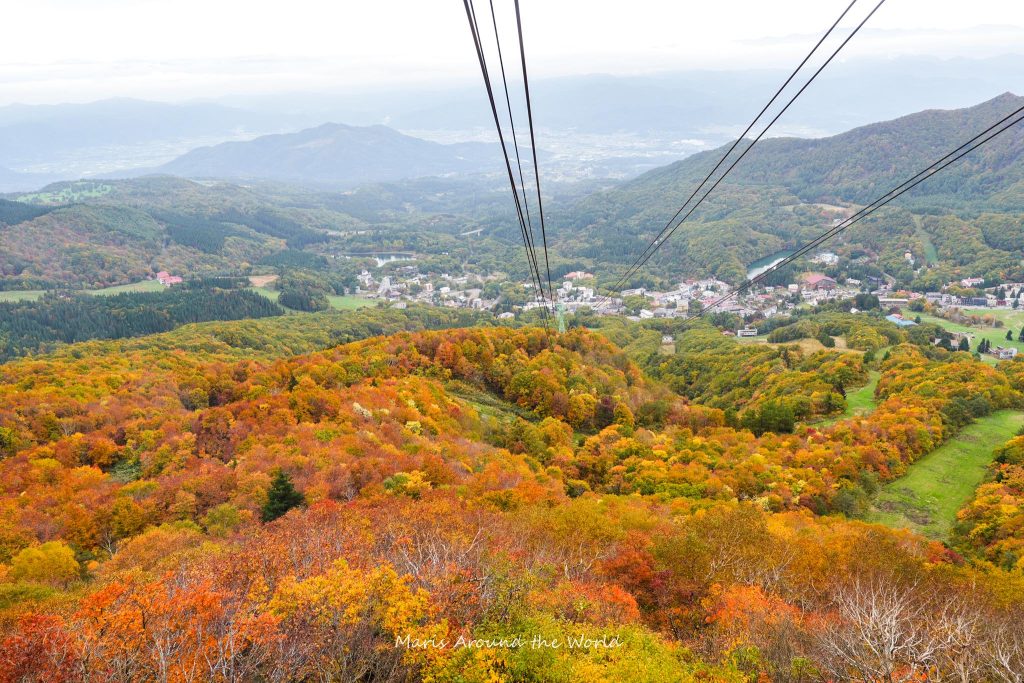
If you are going to ride one ropeway to see fall colors, Hakkoda Ropeway should be the one. The ride up offers a fantastic view of the trees below. It literally looks like a sea of golden orange spread out along the mountainside. At the top, there is a nice walking trail.
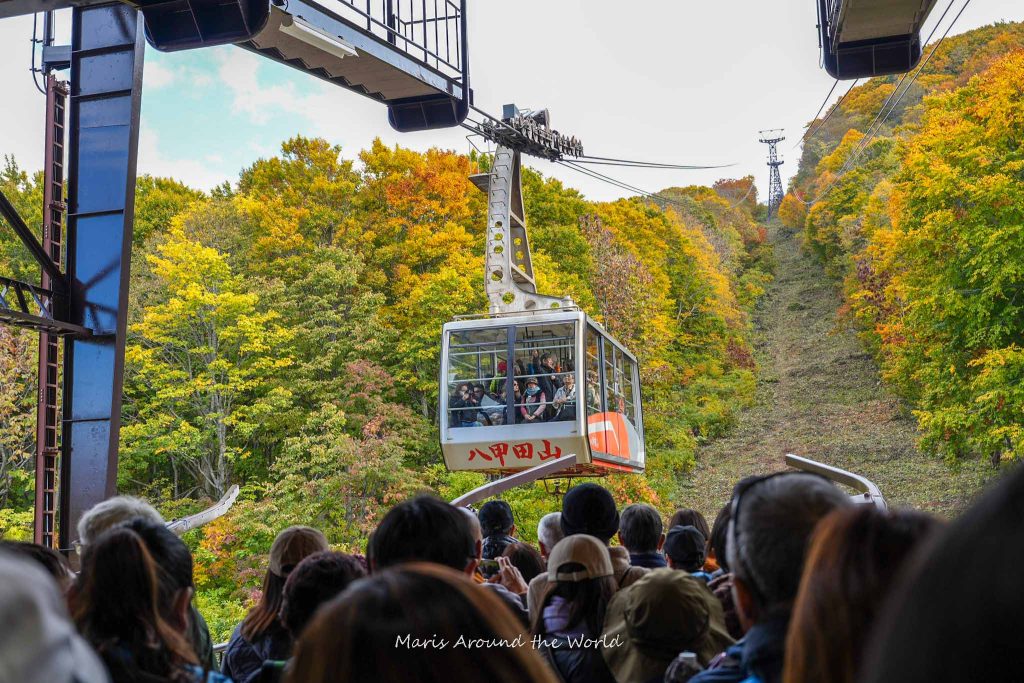
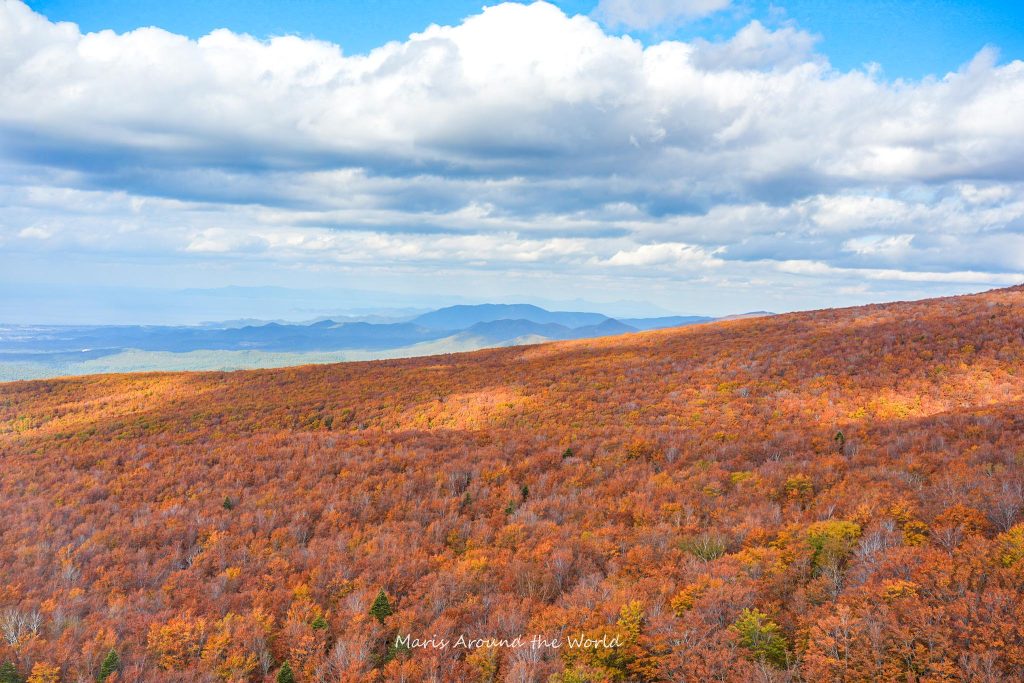
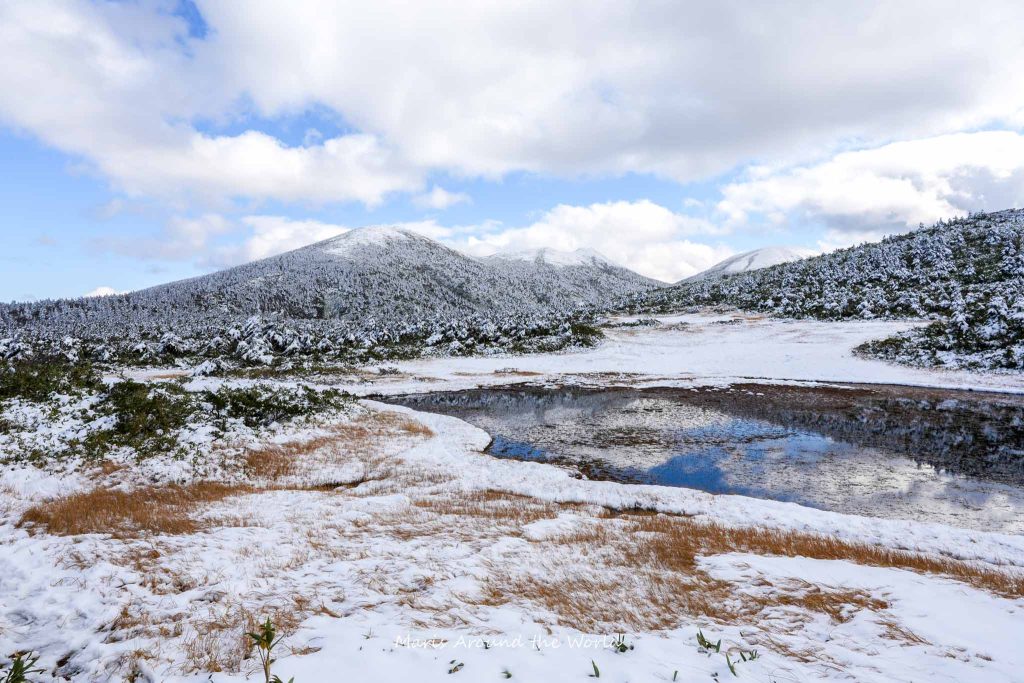
When I visited, I was surprised to see snow! On days with blue skies, the beauty of this area can’t be beat.
Hakkoda Ropeway is a popular spot for tour groups, so expect a wait (at least an hour) during peak season.
Bandai Azumi Skyline – Fukushima
The Bandai Azumi Skyline is a long mountainous road in the northern part of Fukushima Prefecture. As you drive along the winding path, the mountains give way to a valley of orange and red.
While the views are spectacular, it can be hard to fully enjoy the scenery since pull-off spots are limited and often crowded with other cars.
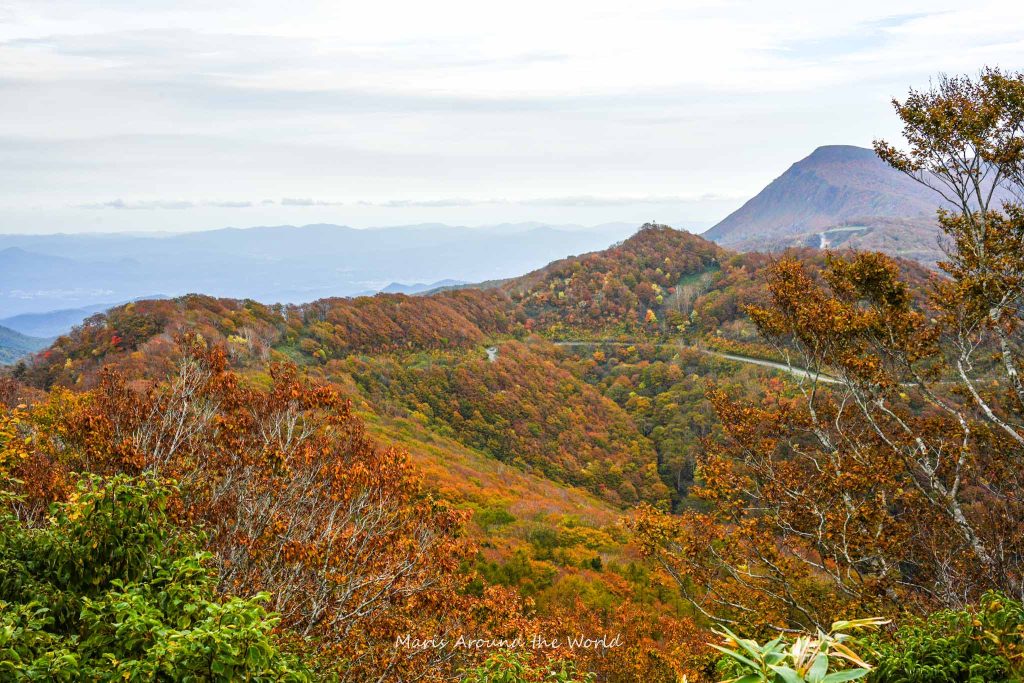
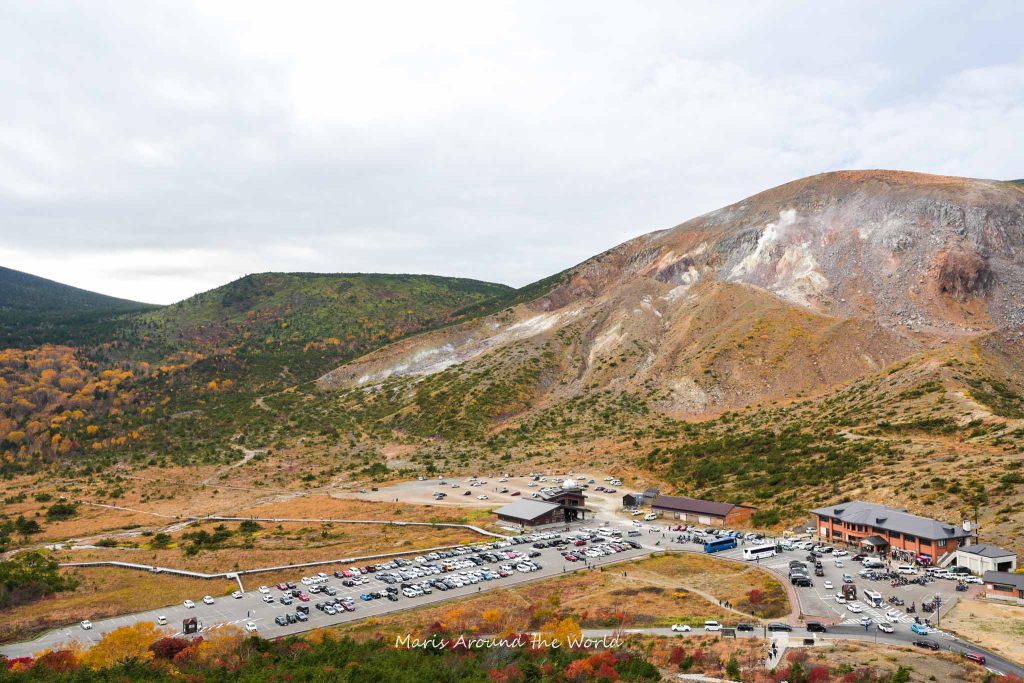
A good place to stop along the way, though, is at Mount Azuma-kofuji. This crater can be climbed in less than an hour and offers a unique view of the scenery around, which looks otherworldly.
Oirsae Stream – Aomori
Oirase Stream is usually among the top places listed when it comes to viewing Japan’s fall colors. It is a very beautiful area with a walking path right by the stream. When I visited, it wasn’t peak colors yet, but I can imagine how stunning it would be.
While I enjoyed most of the walk, some sections ran very close to the road, and there were quite a lot of people on the narrow path. This took away from the tranquility of the otherwise beautiful stroll.
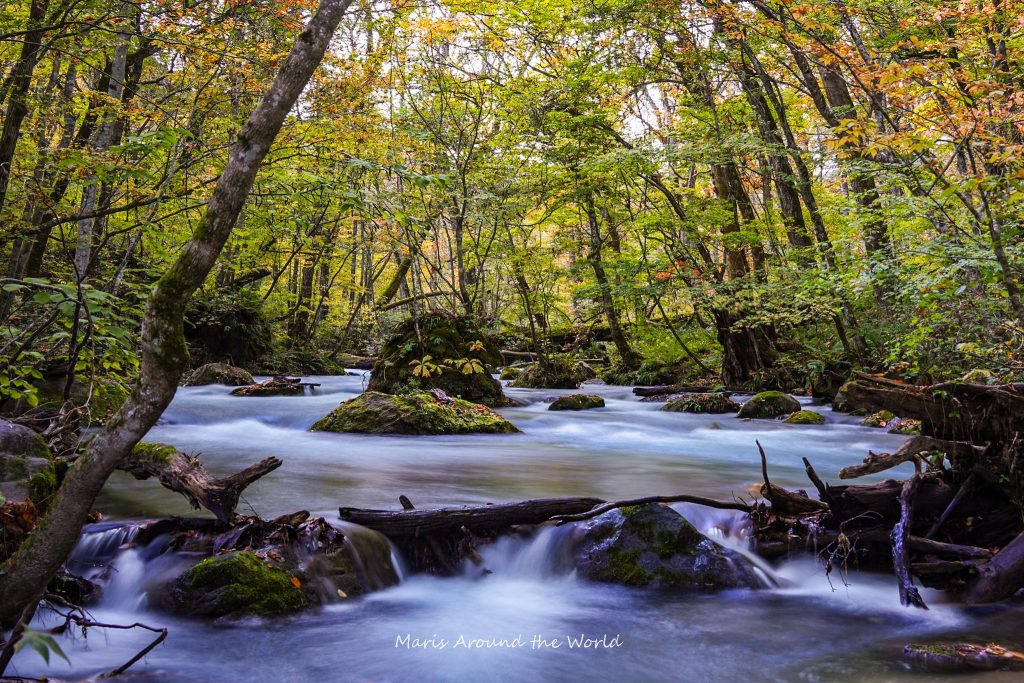
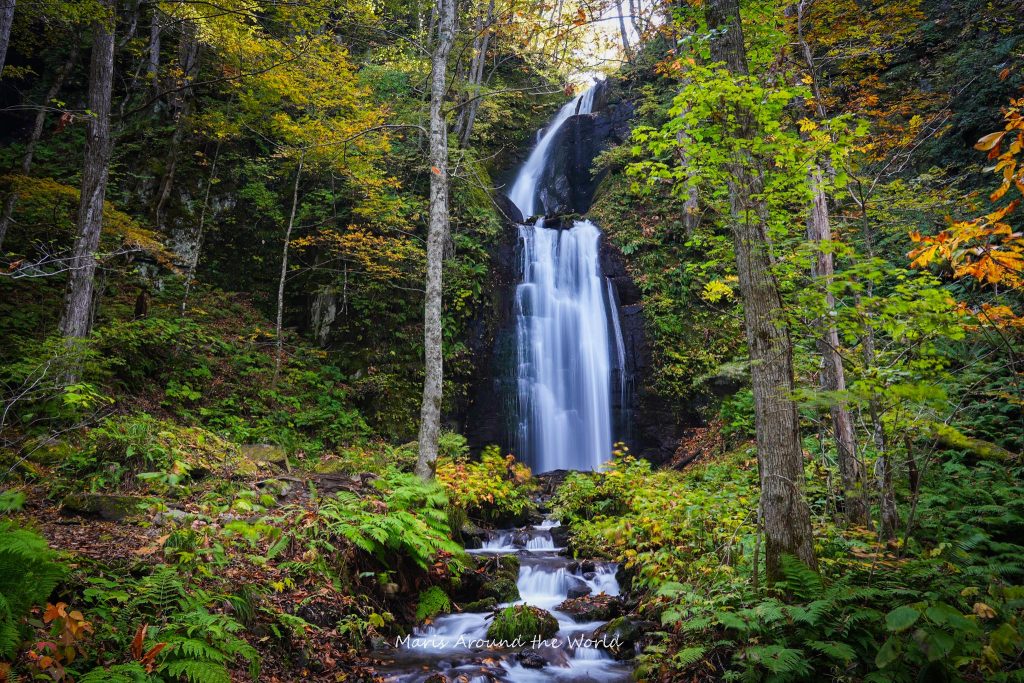
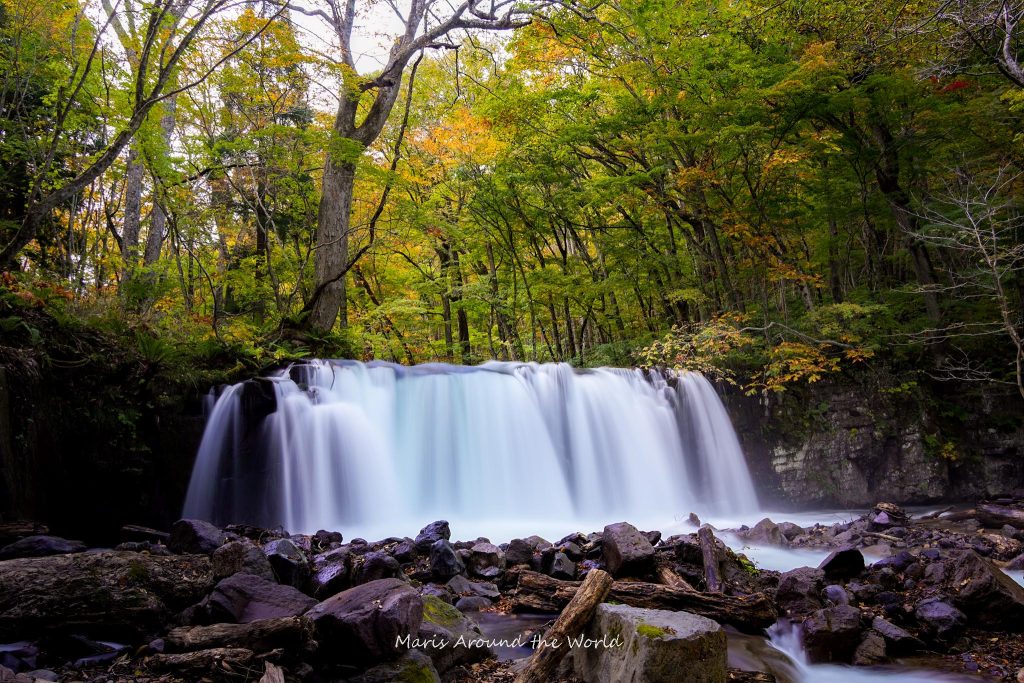
Note: Since this is an incredibly popular spot, getting to the area (and finding parking) can be difficult. During peak season, the main road is closed to regular traffic, so a detour route must be used.
Daily Travel Log
Day 1 – Chiba and Tochigi
On the first day, I arrived at Narita Airport, took a taxi to the campervan rental shop, and then set out on the road. It was rainy and gray, but I was brimming with excitement. Let the Tohoku trip begin!
My first stop was in Tochigi to see Ryuzu Falls just before nightfall. For dinner, I got to whip out my Itaki Shabuki Pot and make the first campervan meal of the trip: soup!
Day 2 – Tochigi and Fukushima
The rain cleared, and I woke to a beautiful day in Nikko, Tochigi. After a morning walk at the Kanman-ga-fuchi Abyss, I checked out the shrines and temples of Nikko, a registered UNESCO World Heritage site.
Afterwards, it was back in the car to see To-no-Hetsuri, and after that, the thatched village, Ouchi-juku, where I ate soba with a giant green onion.
In the evening, I spent the night at a lovely campground and gave a tour of the campervan, revealing one big problem about our sleeping situation.
Day 3 – Fukushima
Day 3 started dark and early with a trip to the First Tadami River Bridge for an epic train photo.
Afterwards, it was off to see the cliffside temple, Enzoji, hike around the colorful Goshikinuma Lakes, and drive across the breathtaking Bandai Azumi Skyline.
Back in town, I picked up dinner ingredients at the Fukushima Roadside Station, then made my way to the campsite for the evening.
Day 4 – Yamagata
We made it to Yamagata Prefecture! On this day, I traveled up the Zao Chuo Ropeway, soaked in a unique outdoor onsen, then sprinted up the 1,000 stairs of Risshakuji Temple (Yamadera).
In the evening, I stopped at a roadside station, then enjoyed another campercar meal.
Day 5 – Akita
Day 5 took me to Akita Prefecture, where I visited the Kakunodate Samurai Village, met an Akita dog, hiked in Dakigaeri Valley, and enjoyed an evening by Tazawako Lake.
Day 6 – Akita
I woke up to a nice morning at Lake Tazawa, then made my way up the mountains to the sulfur-y mud pools of Goshogake Onsen. Here I got to bathe in a special mud bath, steam atop a hot rock bed, then enjoy a restful stay at Shin-Tamagawa Onsen.
At the hotel, I bathed in Japan’s MOST ACIDIC onsen bath!
Day 7 – Akita and Aomori
Back on the road, we finally arrived in Aomori Prefecture! I biked on old railroad tracks at Railbike Odate-Kosaka, saw a beautiful sunset off the coast of Aomori, and gazed at the deep blue waters of Aoike Pond.
Day 8 – Aomori
Still in Aomori, I visited Japan’s largest ginkgo tree, got a tasty squid snack, and explored the tranquil grounds of Takayama Inari Shrine.
From Chokandai Observatory, I could see Hokkaido in the distance. Lunch was at Cape Tappi, the northernmost point of our trip.
For dinner? Curry night!
Day 9 – Aomori
Still in Aomori, the day started with a yummy Nokkedon seafood bowl and a walk through the beautiful Nebuta Museum. Talk about an awe-inspiring museum!
I caught incredible fall colors (and winter snow) at the Hakkoda Ropeway as well as at Jogakura Bridge.
In the evening, I traveled to Sukayu Campsite and soaked in an interesting mixed-gender bath at Sukayu Onsen. It was the chilliest night yet, but we got the campfire going, and the grill was hot with veggies and meat.
Day 10 – Aomori
Day 10 brought me to the mountains of Aomori Prefecture, where I made a quick visit to the Jigokunuma Pond, then walked the stunning nature trail along Oirase Stream. Afterwards, I enjoyed a meal by Lake Towada, and spent the night by the waters at Utarube Campground.
Day 11 – Iwate
Finally started the return trip along the eastern coast of Japan. Day 11 brought me to Iwate prefecture, where I saw stunning cliffs at Kitayamazaki Cape, slurped down some seafood ramen, and visited a local public bath.
Day 12 – Iwate and Miyagi
Since I stayed the night outside of the Iwate Tsunami Memorial Museum in an area that was heavily hit in 2011, the morning started with a walk around to see the nearby Miracle Pine Tree.
Afterwards, I headed to Matsushima, an area known as one of Japan’s most scenic views. In the evening, I enjoyed a stay at Kawauchi Iwana no Sato.
Day 13 – Fukushima and Ibaraki
The end is nearing! Day 13 brought me to the coasts of Fukushima and Ibaraki, Japan. I enjoyed great views of a red torii gate by the sea at Bentenjima, ate at an amazing seafood restaurant in Ibaraki, and spent a leisurely evening at the Oarai Sunset Beach.
Day 14 – Ibaraki and Chiba
On the last full day of the trip, I awoke very early to see an ethereal sunrise at Kamiiso-no-Torii. Afterwards, I slowly made my way to Chiba (stopping at the Kashimanada Seaside Park) to spend my last night at the Choshi Grand Hotel.
Day 15 – Chiba
The last day of the trip, I made my way back to the campervan shop to return the car, then headed to Narita Airport. Wow, what a trip!
Final Thoughts
And that’s the trip in a nutshell!
It was such an incredible adventure; definitely a once-in-a-lifetime journey to remember.
The fall colors were incredible, experiencing campervan life was fun, and visiting a completely new region of Japan was a huge highlight.
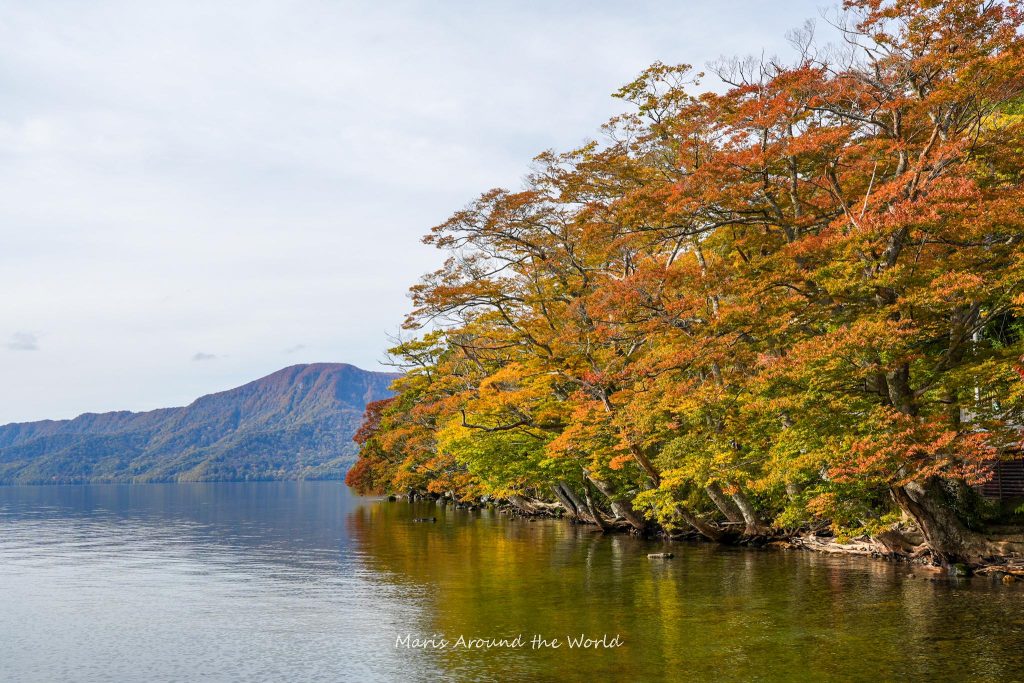
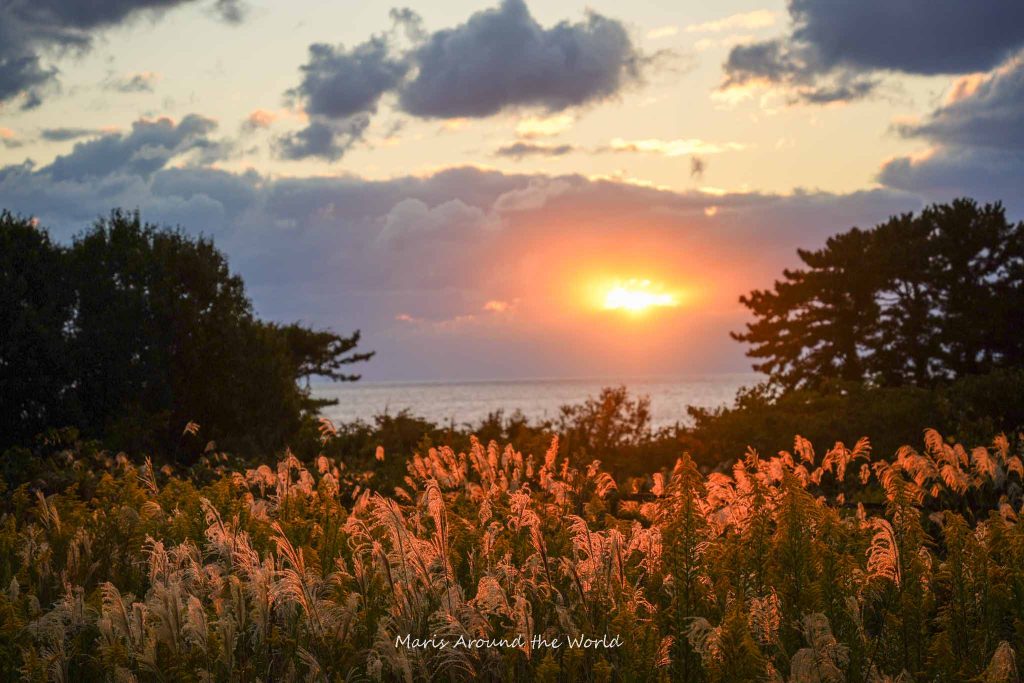
Also, I can’t leave out how amazing and plentiful the onsens and roadside stations were. Because of these, I stayed clean and well-fed the entire trip.
Finally, I was relieved that there were no bear sightings or encounters and that we made it through the trip without any car problems. Time to rest up before the next adventure!
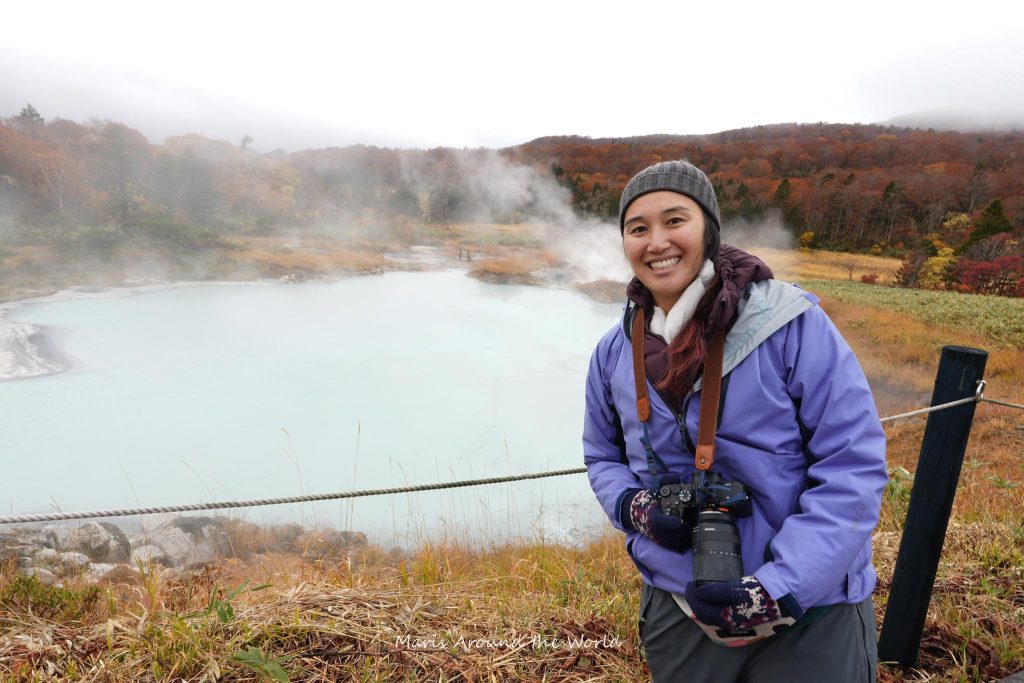
If you want to learn more about how I planned this trip, including renting the camper van, creating the itinerary, and budgeting expenses, check out this video!
Hello! My friend and I are planning to go on a trip as well and looking into copying your journey. How much was the rent for the Van?
Sounds great! I rented the car for about $950. For the full expense breakdown, check out this part of the trip overview video: https://youtu.be/j4pCXzAZuww?t=1645